Transparency & Accountability
AIPAC turns from kingmaker to liability in the 2028 presidential race
Graphic: Times of Palestine
Original Reporting
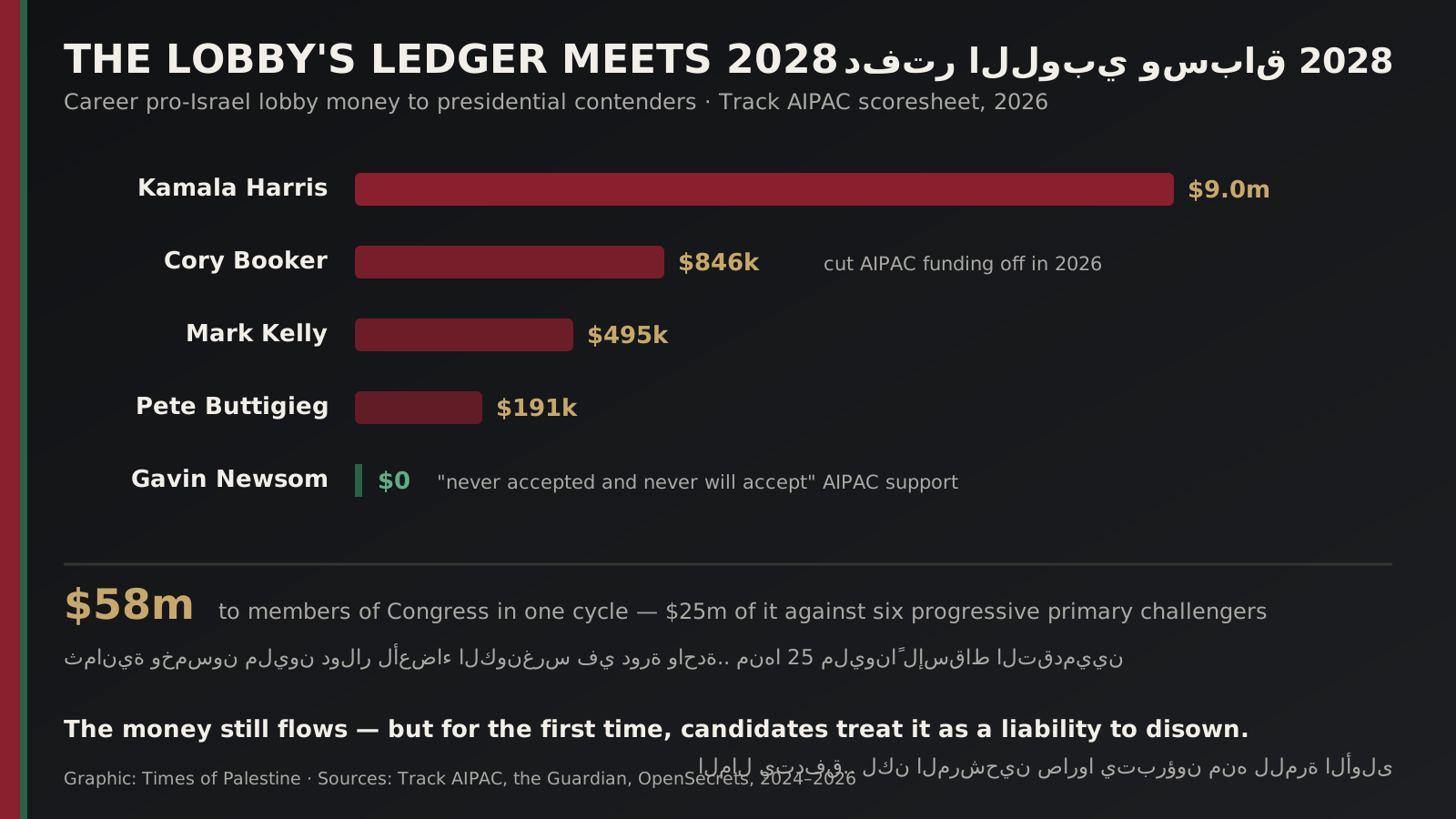
For half a century the safest bet in American politics was that pro-Israel lobby money helped a career and never hurt one. The Guardian's new interactive investigation, published Saturday, lands on a race where that law is breaking: as the 2028 presidential field forms, the money is still flowing — but for the first time, the candidates themselves are treating it as something to disown. Governor Gavin Newsom now declares he has "never accepted and never will accept" AIPAC's support; Senator Cory Booker, whose career total from pro-Israel political committees stands at some $846,000 on the Track AIPAC scoresheet, cut off the group's funding this year. The lobby that could once end a career in a primary is discovering that its endorsement has become the thing candidates apologize for — and for Palestinians watching the capital that will decide Gaza's reconstruction and statehood's fate, both halves of that sentence matter.
The ledger#
The money involved is not small, and it is meticulously public. The Track AIPAC project's presidential scoresheet — built on federal filings — records more than $9 million in pro-Israel lobby money across Kamala Harris's career, roughly $6.1 million in committee contributions and $2.9 million in independent expenditures; Booker's $846,000; Senator Mark Kelly's $495,000; Pete Buttigieg's $191,000. Behind the presidential numbers sits the congressional machine the Guardian documented earlier in the war: more than $58 million from AIPAC, the Democratic Majority for Israel and allied committees to members of Congress in a single election cycle — with some $25 million, forty-two percent of it, concentrated on just six Democrats who defeated progressive primary challengers. That is the machine that unseated Jamaal Bowman and Cori Bush, and its logic was stated plainly to the Guardian by the strategist Waleed Shahid: "There aren't that many lobbies that are willing to spend millions of dollars to unseat you in a primary."
The retreat that isn't one#
What changed is not the lobby's resources but its brand. The Intercept reported in December that AIPAC is stepping back from public endorsements and direct election spending — a retreat from visibility, not from influence, as the outlet put it. Al Jazeera documented in May where the visibility went: as the AIPAC name grew toxic among Democratic voters, spending migrated into a layered system of political committees whose names disclose nothing about their purpose, concealing the money's origin from the voters it courts. And the candidates have learned the new choreography. An analysis by IDN of the Democratic field's positioning found most 2028 hopefuls distancing themselves from AIPAC the organization while embracing the substance of its positions — the Newsom pledge being the emblematic case: a refusal of the money, and a conspicuous struggle, chronicled in American commentary, to say what policy would differ because of it. The lobby's defenders call all of this ordinary pluralism; the Democratic Majority for Israel's president, Mark Mellman, told the Guardian that the lobby system "works this way for every issue." The difference, as the ledger shows, is scale — and what the spending is for.
What it means for the Palestinian file#
Read from Gaza and Ramallah, the interactive documents a shift Palestinians did not have a decade ago: the political cost of pro-Israel lobby money is now real enough that presidential candidates calculate around it, a change driven not by any lobby of Palestine's — there is none remotely comparable — but by the movement of American public opinion through three years of televised destruction. That is leverage, and it is honest to name it. It is equally honest to name its limits: a candidate who refuses AIPAC's dollars while keeping AIPAC's positions costs Palestinians nothing less than before, and the layered committees mean the money's absence from a disclosure form no longer proves its absence from a race. The 2028 winner will inherit the Board of Peace, the stabilization machinery this newspaper profiled through Admiral Brad Cooper's command, and the question of Palestinian statehood that Washington has deferred for a generation. This desk will therefore track the race by the only measure that has ever moved the file: not which checks a candidate returns, but what policy toward occupation, reconstruction and statehood the candidate commits to on the record — a standing entry in our Washington coverage from today.