Politics & Diplomacy
Ali Al Thawadi brokers both Gaza's ceasefire and the Iran deal
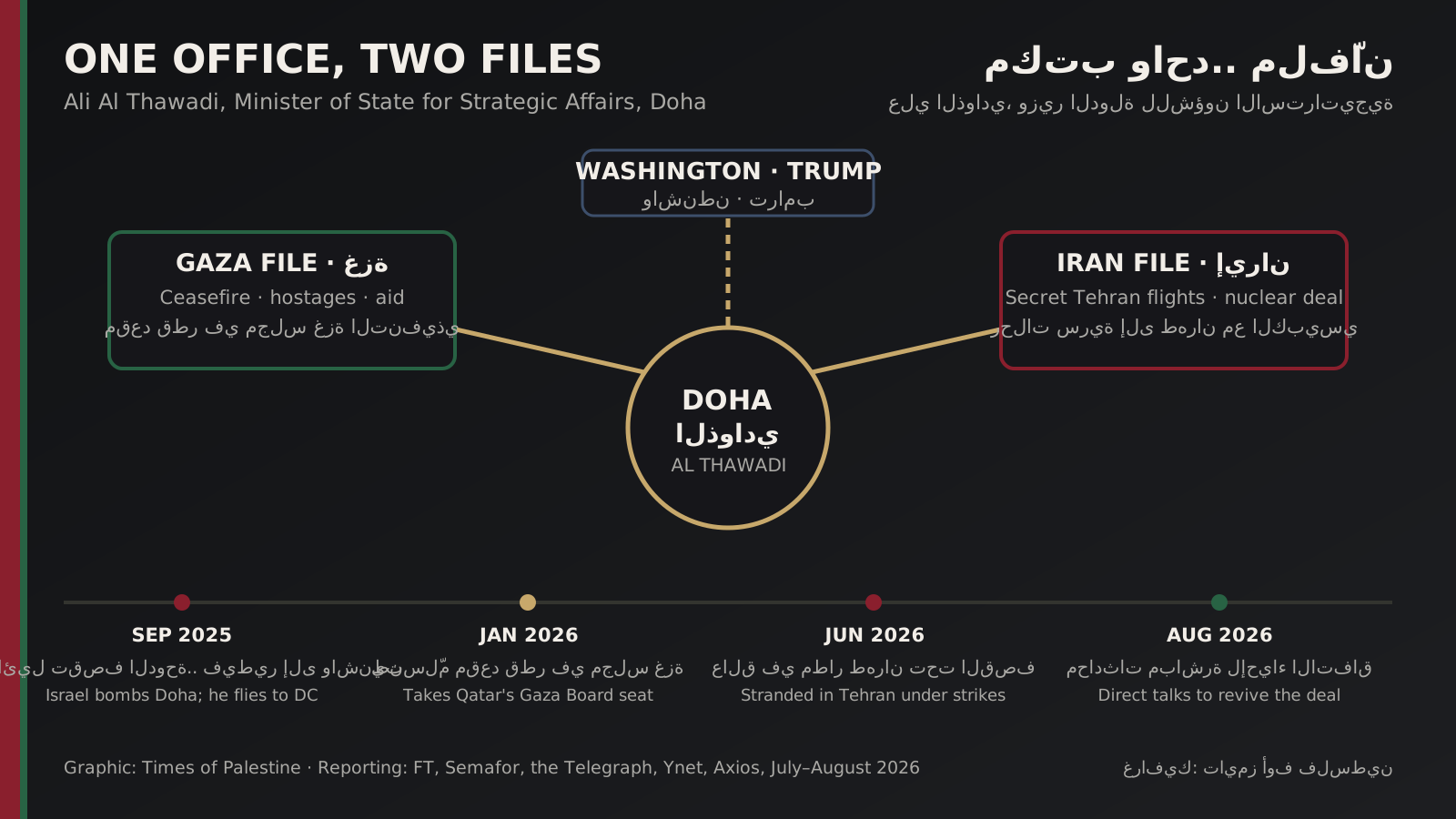
Graphic: Times of Palestine
Original Reporting
When President Donald Trump listed the people who had "largely negotiated" his agreement with Iran, one name on it belonged to neither a head of state nor a foreign minister: Ali Al Thawadi, Qatar's minister of state for strategic affairs — a minister without a ministry, almost unknown to the public a year ago, whom the Telegraph has called the mysterious fixer who saved the Gaza deal from disaster. The two files that will decide the Middle East's next decade — Gaza's ceasefire and reconstruction, and the American-Iranian nuclear agreement — now run to a striking degree through this one discreet office in Doha. For Palestinians, the fact matters practically: the man holding Qatar's seat on the board that oversees Gaza's reconstruction is the same man Washington and Tehran trust to keep their deal alive, and the two files move together or stall together.
The man Doha sends when a deal is dying#
Al Thawadi built his career inside Qatar's ruling establishment and rose through the prime minister's office to a portfolio — strategic affairs — that in practice means the files too sensitive to assign anywhere else. Semafor, which profiled his "quiet influence" in May, described a discreet character operating almost entirely in the background, with a personal relationship with Trump that most foreign ministers would envy. His defining hour came in September 2025, when Israel bombed Hamas's negotiating team in the middle of Doha — an attack on the mediator itself. While Qatar weighed abandoning mediation altogether, Al Thawadi flew to Washington to salvage the process, and when Prime Minister Benjamin Netanyahu telephoned Qatar's prime minister, Sheikh Mohammed bin Abdulrahman Al Thani, to apologize for the strike, Al Thawadi was photographed sitting in the Oval Office beside US envoy Steve Witkoff as the call was placed, the Israeli outlet Ynet reported. Four months later, in January, Qatar announced his appointment to the Gaza Executive Board — the international panel assembled around Gaza's reconstruction — making the backroom fixer, for the first time, the named face of Qatar's Gaza policy.
The Gaza file: from cash suitcases to the reconstruction board#
Al Thawadi's Gaza involvement long predates the war. Ynet has reported that he was a central figure in the arrangement by which Qatari cash — the famous suitcases — moved into Gaza in the pre-war years to pay salaries and keep the territory's economy breathing, transfers that ran with Israel's approval and at Netanyahu's government's convenience, whatever Israeli politicians later said about them. Through the war he worked the hostage exchanges, the aid packages and the ceasefire rounds that Qatar mediated alongside Egypt and the United States. The board seat he now holds is where that history lands: the Gaza Executive Board is the body through which reconstruction money, governance arrangements and the sequencing of Gaza's recovery are supposed to flow, and reporting by AFP around Netanyahu's July 28 White House visit described that reconstruction effort as effectively at a standstill — stalled on exactly the questions of who governs Gaza and who pays that the board exists to answer. Qatar's stated position, delivered through its media office, is that its seat serves "prosperity for the people of Gaza." What Palestinians in Gaza have so far is a ceasefire that largely holds, aid that remains far below need, and a reconstruction whose politics have not caught up with its urgency.
The Iran file: a secret flight, a stranded delegation, a revived deal#
The Iran channel shows how far Doha lets Al Thawadi run. The Financial Times reconstructed how he and fellow negotiator Hamad Al Kubaisi took a secret flight to Tehran this spring, quietly brokering the substance of an American-Iranian understanding; by mid-May the Qatari team believed it had a deal. Instead came the war: after Iranian forces downed an American Apache helicopter, Trump ordered strikes, and the FT reported that the Qatari delegation was stranded for seven hours at a Tehran airport as the bombing it had flown in to prevent unfolded around it. Qatari, Saudi and Emirati leaders personally pressed Trump to give the diplomacy another window, Axios reported in July, and the channel Al Thawadi built survived the war it failed to stop: by late July, Netanyahu was at the White House for his first meeting with Trump since the war began, Trump was announcing direct talks with Tehran and a "very big meeting" within days, and the Jerusalem Post reported Qatari negotiators heading back to Tehran ahead of a possible signing. The Washington Examiner recorded the unusual tribute of an American president crediting a Qatari minister of state, by name, with negotiating his Iran agreement.
Why one office holds both threads#
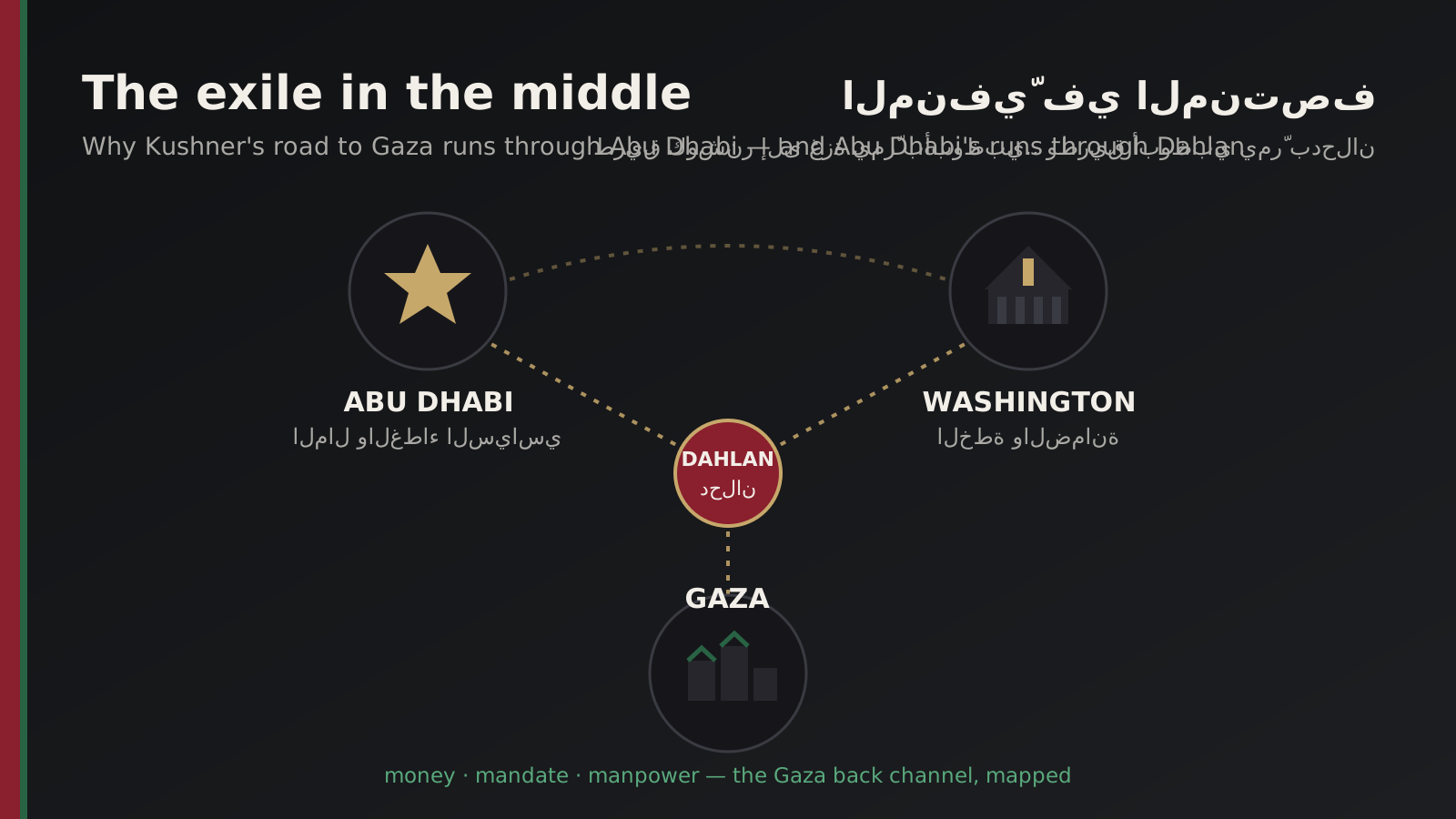
The files are joined by more than one man's calendar. Iran's regional network — and Hamas's relationship with Tehran — sits inside any durable Gaza arrangement, which is why Iranian negotiator Ali Larijani's meetings with senior Hamas officials happen in Doha, on Al Thawadi's ground. And the Doha channel is one pole of a competition this newspaper has been tracking all summer: our investigation into the Kushner–Dahlan backchannel documented how Abu Dhabi promotes Mohammad Dahlan as its instrument in Gaza's future, while Qatar — Hamas's host and now Gaza's seat-holder on the reconstruction board — runs the rival wire. The same American envoys shuttle between both. Which Gulf capital's channel prevails will shape who governs Gaza, whose money rebuilds it, and how much say Palestinians themselves are given in either. Al Thawadi's rise is Doha's answer to that competition: not a doctrine but a person, trusted simultaneously in Washington, Tehran and — through Hamas's political bureau — in Gaza. Times of Palestine will keep reporting the Doha channel with the same scrutiny it applies to Abu Dhabi's: Palestinians have watched outsiders negotiate their future before, and the measure of every mediator, however skilled, is whether Palestinians end up at the table or merely on it.
%20(cropped).jpg?width=640)