Arab Support
Times of Palestine opens a standing ledger of Arab support for Palestinians
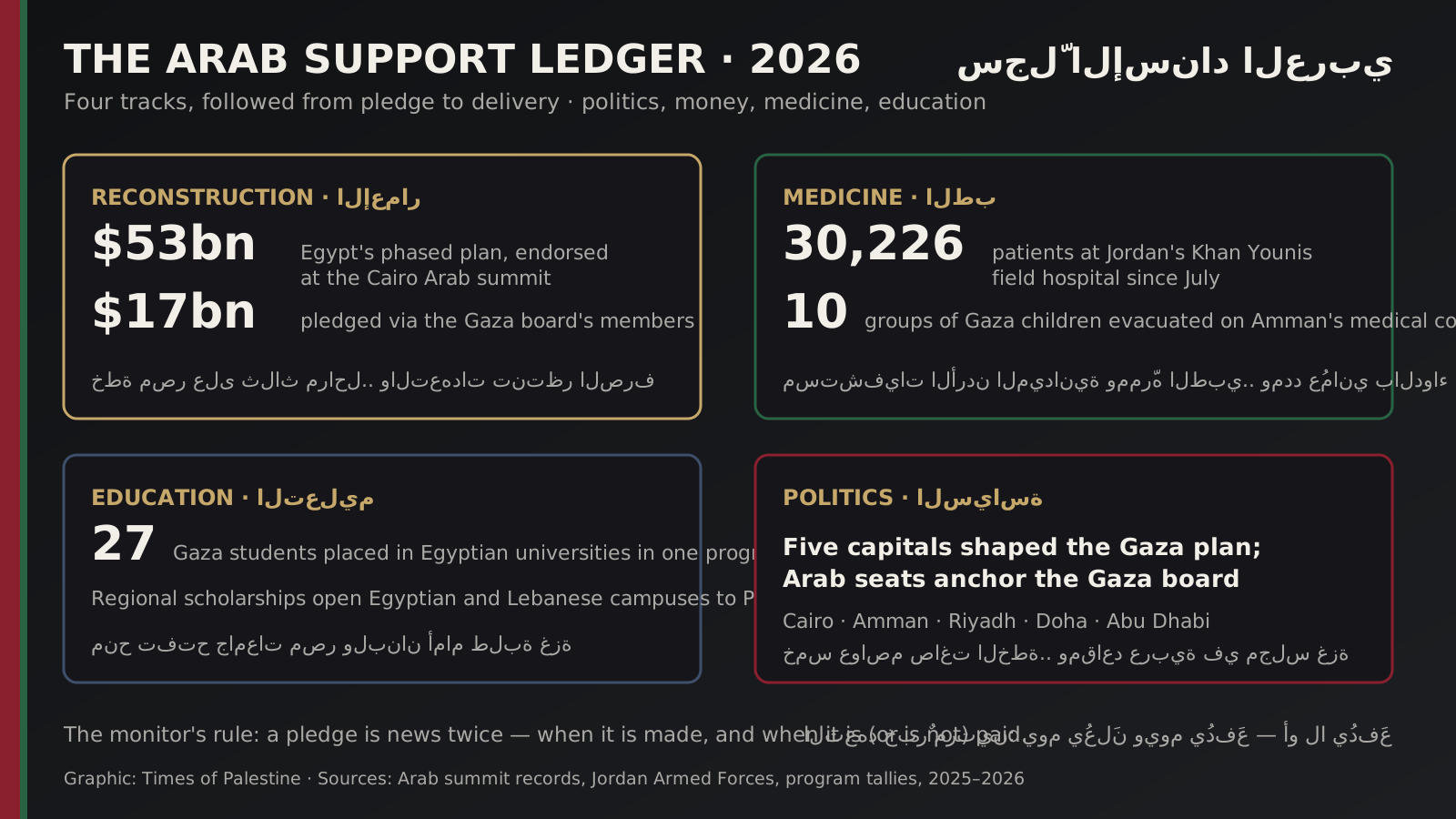
Graphic: Times of Palestine
Original Reporting
What the Arab world does for Palestinians is one of the most consequential and least systematically tracked stories in the region: pledges are announced at summits and forgotten by the next news cycle, field hospitals treat their thirty-thousandth patient without a headline, and a scholarship that changes a Gaza student's life never makes the wires at all. Times of Palestine today opens a standing division to change that — Arab Support («الإسناد العربي»), a section that follows what Arab states, institutions and societies are doing for Palestinians politically, economically, financially, in aid, in education and in culture, with one editorial rule above all: a pledge is news twice — the day it is announced, and the day it is or is not paid. This launch report sets the ledger's opening balance.
Money: the plan and the pledges#
The financial architecture of Arab support runs through two numbers. The first is Egypt's reconstruction plan for Gaza — drafted in Cairo, refined with Jordan, Saudi Arabia, Qatar and the UAE at a Riyadh mini-summit, and endorsed by the Arab League at the Cairo summit: a phased program the Carnegie Endowment and summit records describe as roughly three billion dollars for rubble clearance and temporary housing in the first six months, twenty billion for housing over two years, and thirty billion more for ports and an airport — on the order of fifty-three billion dollars in all. The second number is seventeen billion dollars, the total that members of the international Gaza board — whose ranks include Egypt, Jordan, Saudi Arabia, Qatar and the UAE, and where Qatar's seat is held by the mediator Ali Al Thawadi this newspaper profiled — have pledged for relief and reconstruction, as Al Jazeera reported when the Arab members joined in January. Between those numbers and Gaza's streets stands the machinery this monitor exists to watch: as AFP reported around the late-July Washington meetings, reconstruction remains effectively stalled on the questions of who governs and who pays. The ledger's opening entry is therefore precise: the plan exists, the pledges are on record and attributed, and the disbursement is the story to follow.
Medicine: the corridor that already works#
While the money waits, the most concrete Arab support in Gaza wears a medic's vest and mostly comes through Jordan. The Jordan Times reports that the kingdom's field hospital in Khan Younis has treated more than thirty thousand patients and performed over sixteen hundred surgeries since opening in July, its northern-Gaza counterpart has passed sixteen thousand patients, and army convoys and airdrops resupply both. Alongside the hospitals runs the medical corridor: Jordan has now received its tenth group of sick and wounded Gaza children for treatment in Amman's hospitals, a lifeline that moves in both directions as treated children return. The corridor is regional plumbing, not just Jordanian charity — Oman's latest consignment of medicines and equipment for the Gaza field hospitals arrived through Amman in July, the Jordan News Agency reported — and it is exactly the kind of quiet, repeated, verifiable delivery this section will keep on the front page rather than in the footnotes.
Education and culture: the long investments#
The war has left Gaza's universities in rubble and its students scattered, and the Arab response — smaller than the need, real all the same — moves through scholarship channels: the Phoenix Space initiative has placed twenty-seven Gaza students in Egyptian universities on full scholarships, regional programs such as Tomorrow's Leaders open Egyptian and Lebanese campuses to Palestinian undergraduates, and UNRWA's own scholarship lists route Palestinian students across Arab higher education. Culture travels the same roads: Palestinian film, music, embroidery and publishing survive partly on Arab festivals, prizes and presses that give them stages Gaza and the West Bank cannot currently provide. These are the slowest-compounding forms of support — a scholarship pays out over a career, not a news cycle — and the monitor will treat them as first-class entries, because a people's future is built at least as much in classrooms as at summits.
Politics: seats, summits and the test ahead#
Politically, the Arab states have spent 2025 and 2026 converting solidarity into architecture: the Cairo summit's unified plan, the Arab seats anchoring the Gaza board, Qatar's mediation channel that carried the ceasefire, Egypt's stewardship of the Rafah file, and the diplomatic weight that Saudi Arabia, the UAE and Jordan bring to every Washington conversation about the day after. The monitor will report this track with the charter's constructive-framing rule: clear credit for commitments made and work delivered, precise dating of what remains promised rather than paid, and no cynicism where the record shows delivery — but also no applause for announcements that never become trucks, classrooms or transfers. Every Arab capital's file in this ledger is open, in both languages, and the section will fill with the daily record — the convoys, the corridors, the classrooms and the cheques — from today.