Politics & Diplomacy
Washington's Gaza plan eyes Palestinian money to fill its gap

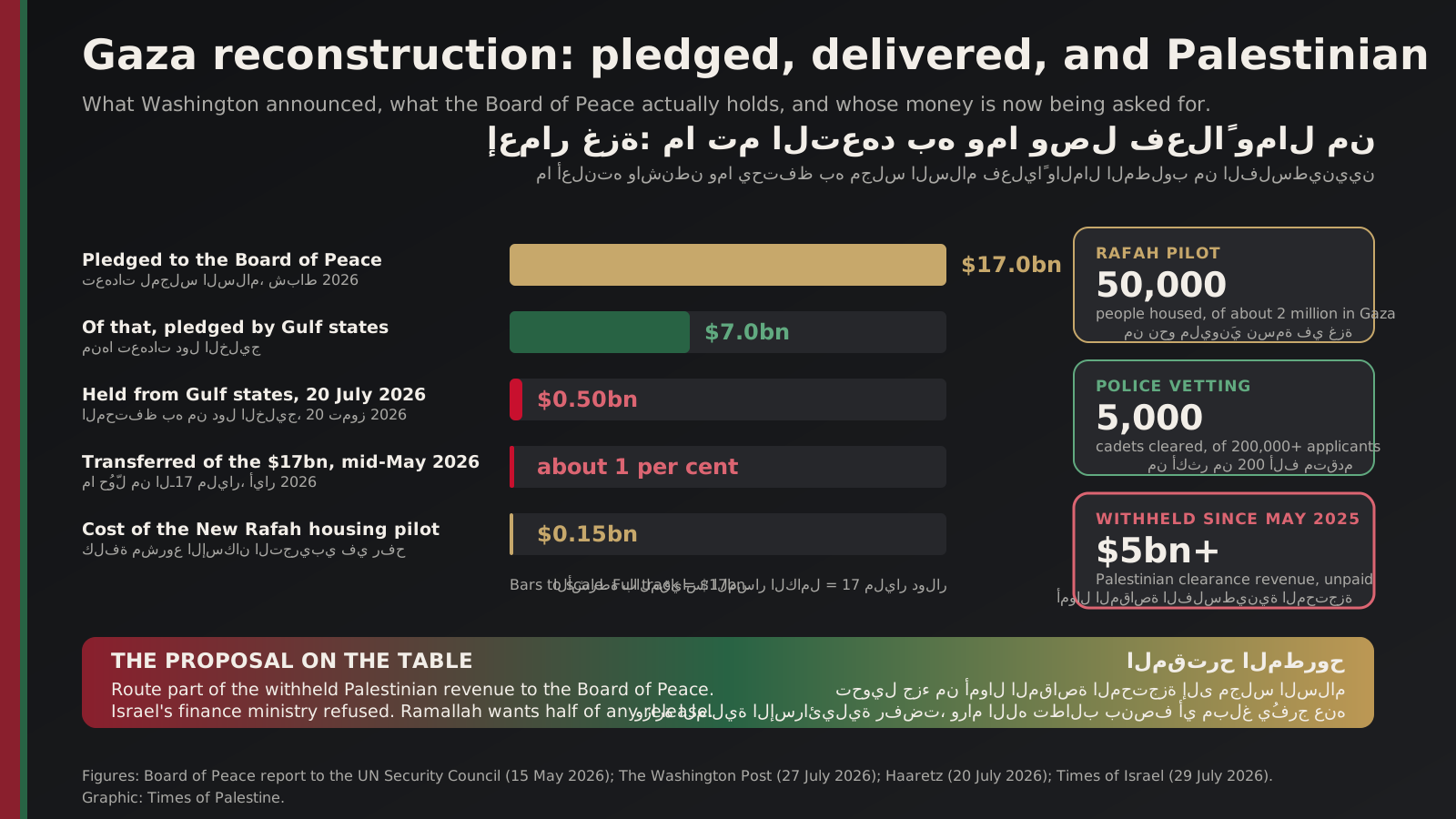
Graphic: Times of Palestine
Original Reporting
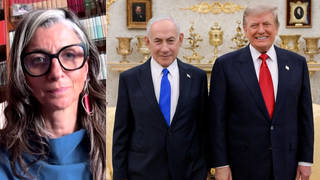
Two conversations ran in parallel in Washington this week, and both were about money. In the first, Trump administration officials confirmed they are working to move billions of dollars of Palestinian tax revenue — money Israel collects on Palestinians' behalf and has refused to hand over for more than a year — into the underfunded body Washington created to run post-war Gaza. In the second, Prime Minister Benjamin Netanyahu spent his first Oval Office meeting since the Iran war began pressing a plan to end American military aid to Israel within a decade. Together they narrow the places where Palestinians can expect Washington to be held to account for what it does in their name.
The pledges, and the arithmetic#
At a fundraising conference in Washington in February, the United States said $17 billion had been pledged to the Board of Peace, the US-chaired body created under President Donald Trump's twenty-point plan to oversee Gaza after the war. Trump committed $10 billion of that himself. By mid-May, roughly one per cent had actually been transferred — the Board said so itself, telling the UN Security Council on 15 May that "the gap between commitment and disbursement must be closed with urgency."
The gap has not closed, and the reason should concern anyone in Gaza waiting for a roof: the war with Iran has disrupted Gulf oil revenues. Iranian attacks on shipping have closed the Strait of Hormuz and oil has passed $100 a barrel. The war Washington is prosecuting has drained the treasuries it expected to pay for Gaza's rebuilding.
| Gaza reconstruction money | Amount | As of |
|---|---|---|
| Pledged to the Board of Peace | $17bn | February 2026 |
| Of that, pledged by Gulf states | $7bn | February 2026 |
| Actually transferred | about 1 per cent | mid-May 2026 |
| Held by the Board from Gulf states | $500m | 20 July 2026 |
| Cost of the New Rafah housing pilot | $150m | 27 July 2026 |
From waterfront resorts to 50,000 units beside a razed city#
The plan has shrunk to fit the money. The Washington Post reported on 27 July that the Board has set aside the "New Gaza" redevelopment Jared Kushner presented at Davos in January — high-rise districts, waterfront resorts — for a pilot project instead. A senior Board official described it as "serious temporary housing" for about 50,000 Palestinians, to be finished before the end of the year, on an Israeli-controlled patch of ground near the razed city of Rafah.
Fifty thousand is roughly one in forty of the people still in Gaza. The World Food Programme said the humanitarian situation "remains brutal" for the up to two million there. Meanwhile the yellow line — the edge of the area the Israeli army holds under the ceasefire — has crept beyond the 53 per cent of the Strip the agreement allotted it, and National Security Minister Itamar Ben Gvir has said flatly that "Gaza is ours." Dan Shapiro, a former US ambassador to Israel, called the housing model "bizarre," doubting Palestinians would move there voluntarily.
A police force with no date#
An official from the Board of Peace said on Wednesday that vetting of a first class of 5,000 cadets for a new Palestinian police force is complete, drawn from more than 200,000 applications, and that training should begin outside the Strip "in the next weeks." Israeli security screening was applied indirectly, to exclude anyone tied to Hamas.
The eventual design, its commander said in February, is some 12,000 Palestinian police and a stabilisation force of up to 20,000, rolled out sector by sector from Rafah. But the same official said there is no timeline, that deployment is "conditions-based," and that the Board is still settling who holds legal authority inside the pilot zone, naming the NCAG as the body that would run it: "We're close to finalising the plans with the NCAG on how they would administer the zone, legally speaking." For a Gazan family that is the whole question — who can arrest you, who can let you back in — and it is unanswered.
The money that is already Palestinian#
Clearance revenue is the customs duty and VAT Israel collects on goods entering the Palestinian territories and is obliged, under the 1994 Paris Protocol, to transfer to Ramallah monthly. Finance Minister Bezalel Smotrich has withheld it in full since May 2025, a step he framed as an answer to the wave of international recognitions of a Palestinian state. More than $5 billion has piled up. It is the majority of the Palestinian Authority's budget.
Ynet first reported, and the Times of Israel confirmed, that Washington asked for part of that money to be routed to the Board of Peace. Smotrich's office rejected the request, saying it could let "Ramallah gain a foothold in Gaza." The Authority has offered to contribute to the Board on condition Israel release the revenue and split any release evenly. The question surfaced again in this week's meetings; asked whether he feared the Authority might collapse under the squeeze, Netanyahu said he believes it will survive.
Three government officials told the Times of Israel the administration is weighing a memorandum with the Authority recommitting both sides to the plan's last two points, Palestinian self-determination and US-led talks, with Ramallah hoping it reopens the PLO mission in Washington. The regional lever is Saudi normalisation: Trump said on 23 July that the signed US-Saudi civil nuclear agreement takes effect only if Riyadh joins the Abraham Accords. Riyadh's stated condition remains an "irreversible pathway" to a Palestinian state, and Netanyahu keeps rejecting statehood outright.
Why an aid question is a Palestinian question#
A senior Israeli official said Netanyahu told Trump, Vice President JD Vance and envoy Steve Witkoff he wants to move "from aid to partnership" and zero out American military assistance within ten years. The current memorandum of understanding gives Israel $3.8 billion a year and expires in 2028. Under Netanyahu's sketch, the $3.3 billion in annual Foreign Military Financing grants would taper to nothing while $500 million a year in missile-defence support stays, alongside a proposed joint research fund of some $16 billion. His reasoning was blunt: Israel does not want its security to depend on politics in Washington, given how views of it have soured in both parties.
That mood has started to register in votes. On 15 April the Senate rejected two resolutions of disapproval brought by Senator Bernie Sanders — one against a $151.8 million sale of 1,000-pound bombs, one against a $295 million sale of Caterpillar D9 bulldozers — by 36 to 63 and 40 to 59. They failed, but forty senators backed at least one, roughly double the support of two years earlier.
Those votes exist only because aid and arms sales pass through Congress. Steven Simon of the Quincy Institute for Responsible Statecraft has argued that replacing grant aid with joint procurement and research funds "will strip away the political and diplomatic oversight mechanisms that make the relationship publicly accountable, moving it from a visible annual aid vote into the opaque machinery of defence acquisition." Rebuilt as co-development, the relationship would leave nothing for a senator to vote against.
The ceiling over all of it#
Everything above sits under the Iran war. Iran fired on an American base in Jordan on Tuesday, hours after the Oval Office meeting and the first such attack since Trump paused US strikes on Friday; Jordanian air defences intercepted five missiles. Trump said on Wednesday it was "our turn" to hit Iran "very hard," while leaving the door to talks open. The senior Israeli official said the two men canvassed three futures: a negotiated deal, economic pressure without further war, or a major new offensive.
Treasury moved the same day, designating ten entities and eight more tankers, including two firms it says are central to an Iranian scheme extracting payments from ships transiting Hormuz. "With its economy in freefall and inflation in the triple digits, the regime is desperate for cash," Treasury Secretary Scott Bessent said.
The near-term test for Palestinians is not whether temporary housing rises outside Rafah before December. It is whether the clearance revenue moves, and on whose terms — because the first serious proposal for funding Gaza's recovery in months is a proposal to spend Palestinians' own money, and the body that would spend it is one no Palestinian voted for.