Research & Investigations
Palestinian 4G slips into 2027 while Gaza remains trapped on 2G

Graphic: Times of Palestine
Original Reporting
A newly published corporate filing puts the clearest date yet on Palestine's long-delayed mobile upgrade: Ooredoo Palestine's financial model assumes a 4G rollout beginning in the West Bank in 2027 and in Gaza in the middle of that year. It is an accounting assumption, not a public launch promise—and it comes after an Israeli approval in January prompted expectations that service could arrive within months.
The disclosure sharpens a basic accountability question: after licenses, approvals and tens of millions of dollars in payments, what exactly still stands between Palestinian subscribers and a live 4G network?
Key findings#
- Ooredoo's latest filing assumes 2027, not 2026. Its unaudited financial information for the six months ending 30 June models rollout beginning in the West Bank in 2027 and in Gaza in mid-2027.
- The dates are financial assumptions, not guarantees. The filing does not announce a commercial launch date, allocated frequencies, coverage target or completed equipment-import process.
- Substantial money is already attached to the upgrade. Ooredoo says it paid a $35.56 million advance for 4G rights and capitalized $49 million for the 4G enhancement to its license.
- Gaza starts much further behind. A 2026 World Bank, UN and EU assessment says more than two million people relied on 2G before the war and estimates that 81% of Gaza's ICT assets have since been destroyed.
- The delay has measurable business consequences. Ooredoo calculates that a 12-month 4G delay would reduce the headroom in its impairment model by $37.3 million.
The date hidden in a financial model#
Ooredoo Palestine posted its first-half 2026 financial documents on 27 July. The detailed statement, reviewed but not audited, contains a sentence that is more specific than the company's public launch language.
In testing whether its mobile-network assets are impaired, the company assumes “a rollout beginning 2027 in the West Bank, and in the middle of 2027 for Gaza.”
That sentence must be read carefully. An impairment model is a calculation built from management assumptions. It is not a regulatory order, construction schedule or guarantee to customers. The filing also tests what would happen if 4G were delayed by another 12 months.
Still, the model matters. Corporate directors authorized the statement on 19 July, making it the company's most recent formal disclosure of the timetable underlying its financial projections.
Ooredoo's accompanying earnings release is less precise. Chief executive Samer Fares says the company's focus remains on launching 4G and improving network quality, without naming a month or year.
Jawwal, the other Palestinian mobile operator, was also still describing itself as preparing for 4G in its first-quarter results. It did not publish a launch date in that statement.
January's approval did not equal a launch#
On 6 January, the Israeli Communications Ministry said it had approved management arrangements involving Jawwal, Ooredoo and Ericsson for the West Bank upgrade. Reuters reported at the time that the process was expected to take up to six months, citing Israeli media.
Nearly seven months later, the latest public statements reviewed by Times of Palestine do not announce live domestic 4G service on either Palestinian network. Both companies describe the upgrade as work still ahead.
The distinction is important. A political or regulatory approval can open a door, but a live network still requires usable spectrum, radio and core-network equipment, import permissions, site access, testing, commercial packages and device support.
Israel's Civil Administration says its communications unit is responsible in the West Bank for frequency use, permits to place telecommunications infrastructure in Area C and approvals for bringing in communications equipment. Palestinian authorities license the operators and regulate their side of the market. The result is a chain in which no single public announcement proves that every step is complete.
Timeline: from permission to a projected network#
| Date | Published milestone | What it does—and does not—prove |
|---|---|---|
| 2018 | Palestinian operators launched 3G in the West Bank | The West Bank moved beyond 2G; Gaza did not. |
| 29 May 2025 | Ooredoo and Palestinian regulators signed a 4G license addendum | The company gained contractual 4G rights, subject to the wider regulatory process. |
| 6 January 2026 | Israel said it approved West Bank management arrangements involving the operators and Ericsson | A major Israeli approval was granted; it was not a commercial launch. |
| 30 June 2026 | Ooredoo's half-year reporting date | The company's impairment model assumes West Bank rollout beginning in 2027 and Gaza in mid-2027. |
| 27 July 2026 | Ooredoo published the filing | The 2027 assumptions became public; no exact launch day or coverage map was announced. |
The money already committed#
Ooredoo's filing provides an unusually detailed view of the economics behind the upgrade.
The company says it paid $35.56 million as an advance for rights to establish, operate, manage and maintain a 4G network in the West Bank and Gaza. Its balance-sheet notes list $49 million as the capitalized cost of adding 4G services to its license.
Those figures sit inside a broader settlement with the Palestinian Ministry of Telecommunications and Information Technology over the original mobile license. The filing values that package at $119.44 million, including cash payments to the ministry and funds allocated to telecommunications-infrastructure projects. It says $52.44 million in cash payments were settled in early 2026.
These numbers should not be added together as if they were all separate payments for spectrum. They describe overlapping parts of the advance, license enhancement and wider dispute settlement. They do show that 4G is no longer merely a memorandum or press-release ambition: it is embedded in enforceable rights, liabilities and asset values.
Timing therefore has a price. Ooredoo's impairment test says a 12-month rollout delay would reduce the model's financial cushion by $37.3 million. That is not a forecast of a cash loss and does not mean the company is currently impaired. It is a sensitivity calculation showing how materially the expected launch date affects the estimated value of the network.
The operators remain functioning businesses while customers wait. Ooredoo reported first-half revenue of $59.7 million, net profit of $7.9 million and 1.527 million customers. Jawwal's parent reported first-quarter revenue of 81.4 million Jordanian dinars and net profit of 12.3 million dinars. Those results do not establish that either company caused the delay; they show the scale of the regulated market in which the delay is occurring.
Gaza is not simply one rollout phase behind#
The West Bank's problem is an overdue upgrade from 3G. Gaza's is a damaged network built on 2G.
The International Telecommunication Union's 2025 development conference recorded that Gaza's mobile networks still operated on 2G and called for urgent assistance with Palestinian spectrum, 4G and 5G.
The April 2026 Rapid Damage and Needs Assessment—prepared jointly by the World Bank, United Nations and European Union—goes further. It says more than two million people in Gaza relied exclusively on 2G mobile service before the war, with no 3G, 4G or 5G mobile broadband.
It estimates:
- $200.7 million in direct ICT damage;
- 81% of ICT assets destroyed and another 12% partially damaged;
- $346 million in sector losses;
- $500.5 million needed for recovery and reconstruction over five years.
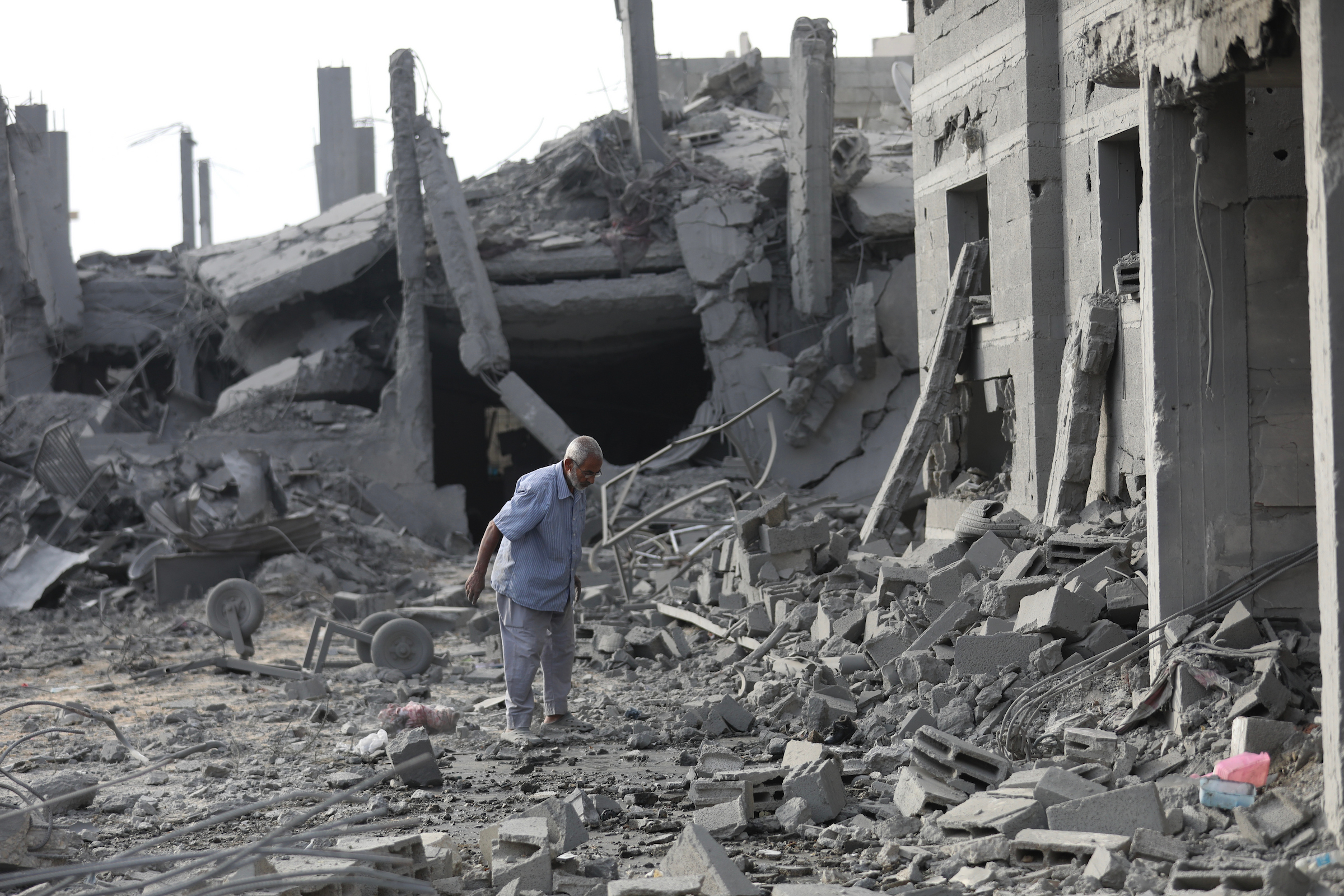
Those estimates cover more than mobile towers. They include fixed-access nodes, fiber backbone, data centers, exchanges, warehouses and other facilities. They also carry uncertainty: access restrictions mean the assessment combines remote evidence with available ground verification and should be followed by deeper site-level work.
A mid-2027 Gaza rollout in a financial model therefore depends on much more than switching on a frequency. Sites must be safely reached, unexploded ordnance and debris cleared where relevant, power restored, equipment admitted, backhaul rebuilt and enough functioning towers connected to provide meaningful coverage.
Why 4G is infrastructure, not a luxury#
The difference between 2G, 3G and 4G is not just how quickly a video loads.
Gaza's 2G network can carry basic voice and text and limited data, but it does not provide modern mobile broadband. That affects telemedicine, remote learning, digital payments, cloud tools, media transmission, mapping and the ability of displaced people and aid workers to move large amounts of information reliably.
In the West Bank, Palestinian operators compete with Israeli networks that already offer 4G and 5G. Palestinian subscribers can sometimes roam onto those networks, including through paid packages, but roaming is not the same as a nationally controlled Palestinian broadband network with its own coverage obligations, pricing and resilience planning.
The contrast is growing. Israel began freeing spectrum used by its own 2G and 3G networks in February for advanced 4G and 5G services. At the same time, Palestinian operators were still preparing their first domestic 4G launch.
The unanswered milestones#
The public record does not yet provide a launch dashboard. Before subscribers can judge whether the 2027 assumption is realistic, the operators and regulators should publish answers to at least seven questions:
- Which frequency bands and how much spectrum have been assigned to each Palestinian operator?
- Which West Bank equipment-import and site permits remain outstanding?
- What constitutes the “soft launch” that starts the 15-year 4G license period?
- What minimum coverage, speed and reliability targets will apply—and who will audit them?
- What separate approvals are required for Gaza, and which have been obtained?
- Will rebuilding use shared towers, emergency roaming or other measures to reduce duplication and speed coverage?
- How will prices and device compatibility be handled so the upgrade does not exclude low-income subscribers?
Without those milestones, “approval,” “preparation” and “launch” can describe very different stages while the public remains unable to measure progress.
Methodology and fairness#
Times of Palestine compared the operators' latest public financial documents and statements with Israeli regulatory descriptions, an ITU resolution and the April 2026 multilateral damage assessment. We treated Ooredoo's 2027 dates as assumptions used in a financial model—not as a confirmed launch schedule. Financial figures are reported in their original currencies and are not combined where the filing describes overlapping obligations.
This report makes no new allegation of misconduct. It represents Ooredoo and Jawwal through their latest published statements and the Israeli authorities through their stated approvals and official description of regulatory responsibilities. Publication was not held for bespoke replies because the central finding comes directly from newly released public records. Times of Palestine will add any material clarification from the operators, Palestinian regulators, Ericsson or the relevant Israeli authorities.
Sources and documents#
- Ooredoo Palestine, unaudited condensed interim financial information for the six months ended 30 June 2026, authorized 19 July and published 27 July 2026; English. Establishes the license terms, payments, settlement and 2027 rollout assumptions. Accessed 30 July 2026.
- Ooredoo Palestine, first-half 2026 earnings release, 27 July 2026; English. Establishes current revenue, profit, customer count and the company's public launch language. Accessed 30 July 2026.
- Jawwal, first-quarter 2026 results, 2026; Arabic. Establishes Jawwal's financial results and statement that it was continuing preparations for 4G. Accessed 30 July 2026.
- World Bank, United Nations and European Union, Rapid Damage and Needs Assessment for Gaza, 20 April 2026; English. Establishes Gaza's prewar 2G baseline and the ICT damage, loss and recovery estimates. Accessed 30 July 2026.
- International Telecommunication Union, World Telecommunication Development Conference 2025 final acts, 2025; English. Establishes the ITU's finding that Gaza remained on 2G and its resolution on Palestinian spectrum and advanced networks. Accessed 30 July 2026.
- Israel Civil Administration, Communications and Mail unit, undated current page; Hebrew. Describes Israeli responsibilities for frequencies, Area C infrastructure and equipment approvals. Accessed 30 July 2026.
- Reuters report on the January 2026 Israeli approval, by Steven Scheer, 6 January 2026; English. Records the Israeli Communications Ministry's approval statement and the reported implementation expectation. Accessed 30 July 2026.
- Israeli Communications Ministry, first phase of 2G/3G shutdown, 10 February 2026, updated 1 March 2026; Arabic. Establishes the contemporaneous Israeli transition toward 4G and 5G. Accessed 30 July 2026.
Corrections#
Times of Palestine welcomes documented corrections. This report will be updated if a regulator or operator publishes a firm launch date, frequency allocation, coverage target or material clarification of the financial assumptions.