West Bank & Jerusalem
An order to empty a fourth camp reveals displacement machinery

Graphic: Times of Palestine
Original Reporting
Israeli Defence Minister Israel Katz has said he instructed the army to prepare to take over another West Bank refugee camp and expel its residents, adding a fourth camp to three that have been emptied of most of their people since the start of 2025.
A statement from his office said the decision was intended to "expand the scope of offensive operations" and followed a security meeting attended by Chief of Staff Eyal Zamir and senior police and security officials. Haaretz reported that security sources say the security cabinet is discussing widening the operation to further camps.
Why this matters#
The order does not stand alone. It sits on top of a structure built over four years: settlement expansion at a scale without precedent, the transfer of civil powers from the army to a ministry run by a civilian minister, and a pattern of daily violence that empties small communities before the army reaches them at all.
The result is that displacement in the West Bank is no longer an exceptional event attached to a particular military operation. It is a process with its own instruments, budgets and published figures.
By the numbers#
- About 40,000 people were displaced from the Tulkarm, Jenin and Nur Shams camps from the start of 2025, according to figures carried by Haaretz.
- 64 Palestinian communities, home to 4,328 people, were emptied completely between 2023 and the end of June under settler pressure, according to B'Tselem figures cited by Haaretz.
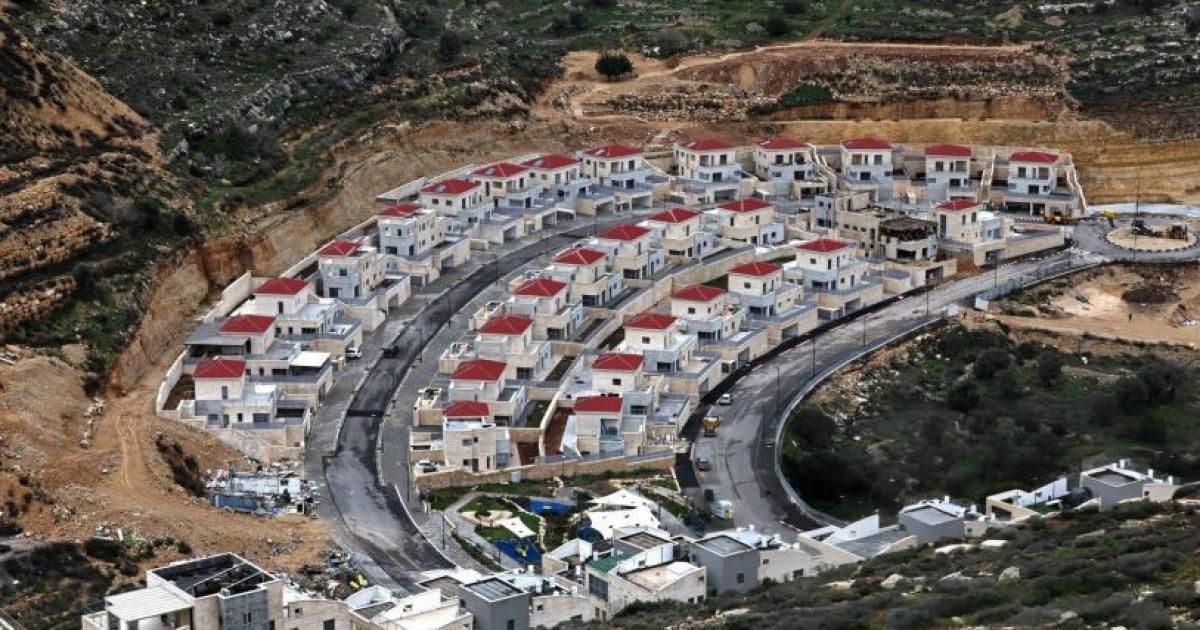
- 103 new settlements have been approved under the current government, including outposts that had not previously been recognised, according to a report in Yedioth Ahronoth.
- More than one million dunams are now held by settlement "farms", against fewer than 200,000 dunams occupied by every built settlement and settlement town combined.
- The number of these farms rose from about 50 in 2022 to close to 140 this year.
The instrument that draws least attention#
The most consequential figure in that list is not the number of settlements. It is the ratio of land. Settlement farms — typically a pen, a mobile home and a herd — control more than five times the area taken up by all the built settlements together.
Grazing here functions as a means of controlling land rather than as an economic activity. A herd moved daily across Palestinian fields makes staying unworkable for the families who own them, with no need for a bulldozer, a military order or a court ruling.
Yedioth Ahronoth reported that an association devoted to these farms was founded shortly after 7 October 2023, and that it works in "full cooperation" with state authorities and in close coordination with the army and security forces.
When authority moves#
In 2023 Finance Minister Bezalel Smotrich, who also holds a post inside the Defence Ministry, signed a document alongside the prime minister and the defence minister of the day allowing powers of the Civil Administration to be transferred. The Administration was not privatised outright, but a substantial share of its authority moved, and the body itself is due to relocate from a military base to an industrial zone.
In practice, planning, building and demolition decisions in the West Bank now sit closer to a civilian ministry than to a military administration — while nothing changes in the status of the people subject to them.
Smotrich's office said in a statement that the minister had led a "historic revolution" in the West Bank aimed at "strengthening the security of the State of Israel and uprooting the idea of establishing a terrorist state". Peace Now said he had "devoted all his energy to promoting the settlements, pumping enormous budgets into them and deepening Israel's international isolation".
Seventy-two hours#
Katz's order followed a deadly confrontation on Friday in the village of Tel, near Nablus, in which two Israelis and four Palestinians were killed. The Israeli army described it as a "terrorist attack".
In the hours that followed, according to Haaretz and Palestinian outlets it cited:
- The Civil Administration demolished buildings in the northern West Bank, some of them outside the village boundary.
- A curfew was imposed on Nablus and a full curfew on the villages of Tel and Burin. Dozens of homes in Tel were searched, including those of the families of the Palestinians killed, and several of their relatives were arrested.
- Two mosques were set on fire, in Qusra south of Nablus and in Kur south-east of Tulkarm.
- A Bedouin community near Jaba' in the northern West Bank was attacked, and a family home in Khallet al-Hamas, south of Hebron, was surrounded and fired on with live ammunition.
- Vehicles and farmland were burned in Bitillu, north-west of Ramallah, and incitement was daubed on walls in Beit Furik, east of Nablus.
Israeli police said they had arrested two settlers on suspicion of arson and writing inciting graffiti.
Commenting on the demolitions, Smotrich said the choice of buildings was "not random", adding: "We control the area and we are preventing the establishment of a Palestinian state."
Much about the order remains unknown. The statement did not name the camp to be emptied, and no population figure has been given. No housing plan has been published for those displaced from the three earlier camps, most of whom have not returned, and the order speaks of expelling residents rather than of a measure with a stated end date. Security sources describe a discussion about widening the operation beyond a fourth camp, without a number or a timetable.
Israeli elections are three months away. No schedule for the new operation has been published.