Financial Freedom
Locked out of their own money in the West Bank
Graphic: Times of Palestine
Original Reporting
In the occupied West Bank, money itself has become a front line. Gas stations have refused customers' banknotes because their banks will no longer accept deposits. Businesses pay to guard cash they cannot bank. And the institution responsible for Palestinian monetary stability says openly that the system has been turned into a weapon. "The banks have been shackled," Mohammad Manasra, deputy governor of the Palestinian Monetary Authority, told The Associated Press this month. "What is being practiced in the West Bank is economic warfare."
The mechanics are simple and suffocating. Palestinians have no currency of their own; the Oslo-era arrangements left the West Bank running on the Israeli shekel, with no Palestinian say over the monetary policy that governs it. Workers employed in Israel and its settlements are paid in cash. Palestinian citizens of Israel add more banknotes when they cross to shop. All of that paper flows into Palestinian banks — and very little of it is allowed back out. Israel caps the cash it will take back from the Palestinian banking system at 18 billion shekels a year, roughly 5.9 billion dollars, while economists estimate the banks now accumulate around 30 billion shekels a year. The difference sits in vaults: money that earns nothing, funds no loans, and must be stored and insured at the banks' own expense.
The consequences reach every corner of daily life. When banks' assets are trapped as paper, they struggle to make the electronic transfers that pay for the fuel, water and electricity the West Bank imports. Filling stations have shut their pumps; station owners staged a coordinated strike to demand action. Companies that collect millions of shekels in sales cannot deposit them, and resort to loans or currency swaps just to pay suppliers. Households, fearing that soldiers conducting home raids will confiscate large sums, rush to deposit cash into the very banks that can no longer take it.
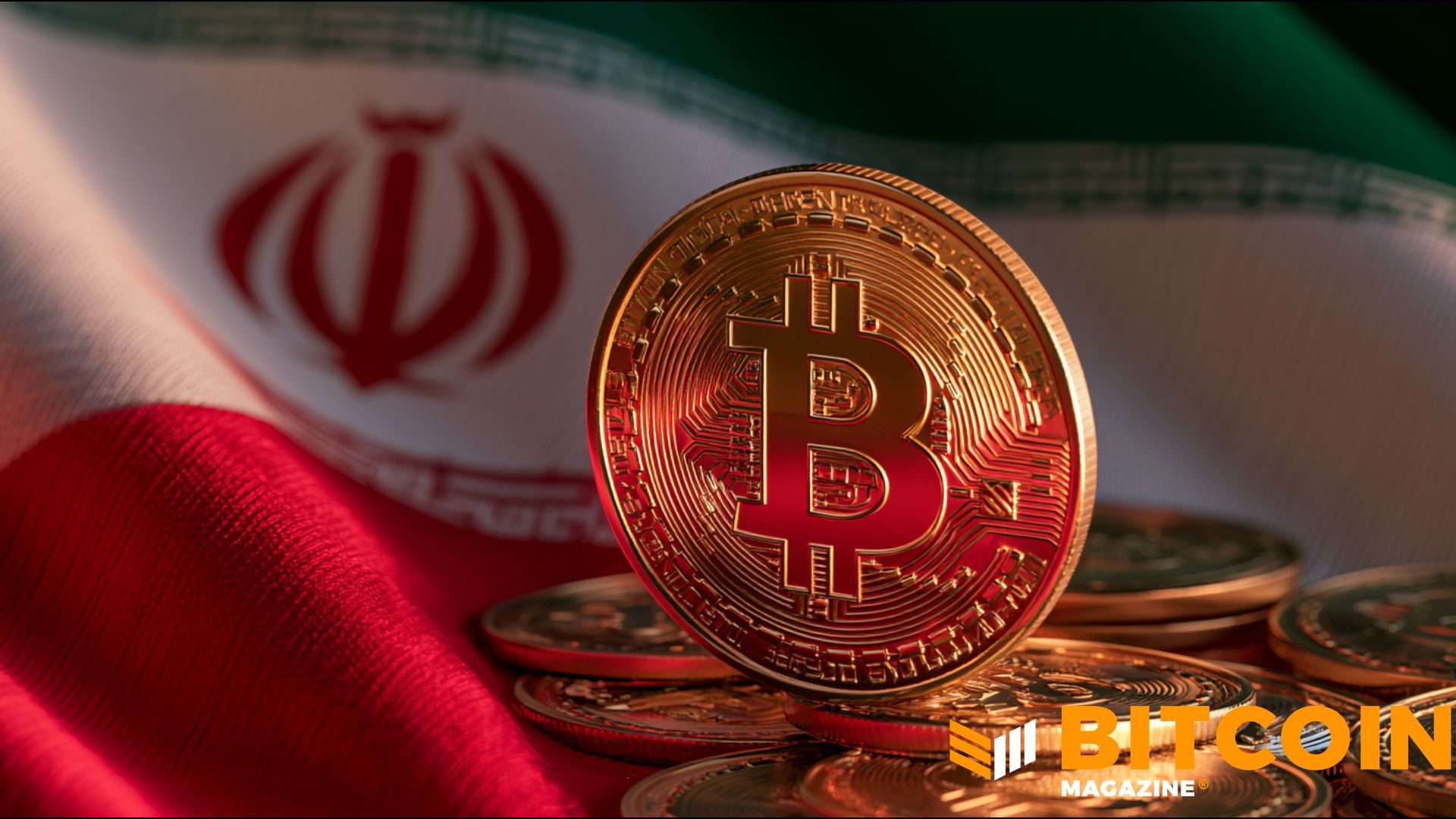
This is the context in which a global conversation about what advocates call "freedom money" has reached Palestine. Bitcoin — a currency no bank must hold, no authority can print, and no outside power can cap, freeze or confiscate when it is held properly by its owner — has been proposed as one practical answer to financial systems that fail the people inside them. The Human Rights Foundation's Alex Gladstein made the case directly in his 2021 essay "Can Bitcoin Be Palestine's Currency of Freedom?": a tool for receiving remittances without permission, for saving beyond the reach of seizure, and for moving value across borders and checkpoints without correspondent banks — in his words, "a peaceful protest, a digital shield."
Palestinians would not be the first to route around a broken system. In Nigeria, protest movements turned to Bitcoin when their bank accounts were frozen, and surveys now suggest roughly a third of Nigerians have used cryptocurrency. In Afghanistan, when the banks closed in 2021, Bitcoin kept some families fed. In Lebanon, where the banking system collapsed and savers were locked out of their own deposits, hard money outside the banks stopped being a theory and became a survival strategy. The pattern repeats wherever banking is unreliable, censored, or weaponized.
Honesty requires the caveats. Serious critics — including economists deeply sympathetic to the Palestinian cause — argue that no currency can substitute for sovereignty, that Bitcoin's volatility and dependence on internet access limit its usefulness, and that its earliest benefits tend to reach the connected middle class before they reach a laborer paid in shekel notes at a checkpoint. Those objections deserve to be heard, and this newsroom will report them.
But the cash crisis has moved the question from theory to necessity. When the system built around you refuses your money — caps it, traps it, and confiscates it — the search for money that cannot be refused is not speculation. It is self-defense. Times of Palestine will follow both stories as they unfold: the engineered crisis of the shekel economy, and every serious alternative Palestinians are building, testing, and debating. That is what our Financial Freedom section is for.