Arab Support
Khalaf Al Habtoor urges Arabs to reject a foreign-led Gaza council

Image credit: Khalaf Al Habtoor — Wikimedia Commons · License
Original Reporting
One of the Gulf's most prominent business patriarchs publicly turned on the Board of Peace on Tuesday. Khalaf Al Habtoor, founding chairman of Dubai's Al Habtoor Group, asked in a Facebook statement why the body supervising Gaza treats Palestinians "as a people in need of international trusteeship, when they are the owners of the land and the cause."
The Emirati billionaire's argument, posted in Arabic to his followers, runs on a single blade: obligations that bind one side only are not peace terms.
"If the goal is peace, why does supervision fall on one party alone? Is peace not the responsibility of all parties?"
Khalaf Al Habtoor, 4 August 2026
The double-standard charge#
Al Habtoor pressed the question of why the council's mandate stops at Gaza's edge. Why, he asked, are Palestinians treated as the party that must prove good faith, "when they are the ones who paid, and still pay, the price of this conflict?" If every party has rights worth protecting, he wrote, justice demands the same standards and the same obligations for all — "without exception or discrimination."
He reserved his sharpest line for the council's composition: foreign officials lead the body, he wrote, while the Arab and Palestinian role in administering "an Arab land and an Arab people" is absent. The first claim on leadership belongs to Arabs and to Palestinians themselves, with international support assisting the national will, "not replacing it."
"Not trusteeship — justice"#
The statement's core reads as a direct answer to the trusteeship model itself. Palestinians, Al Habtoor wrote, have proven across decades to be an educated, striving people with successful institutions across the world. "They do not need trusteeship — they need justice. They do not need someone to manage their affairs, but someone who respects their rights and honours what is agreed."
His conclusion goes further than complaint: Arab states, he argued, should refuse any "peace council" or international framework for running Gaza unless Palestinians first, and Arabs second, hold the leading role in it. Leaving Arabs "outside the scene, asked to watch or to fund," serves neither a just peace nor a stable one.
"Real peace is not built by trusteeship. It rests on justice, human dignity, and equality in rights and duties."
Khalaf Al Habtoor, 4 August 2026
Why the intervention lands#
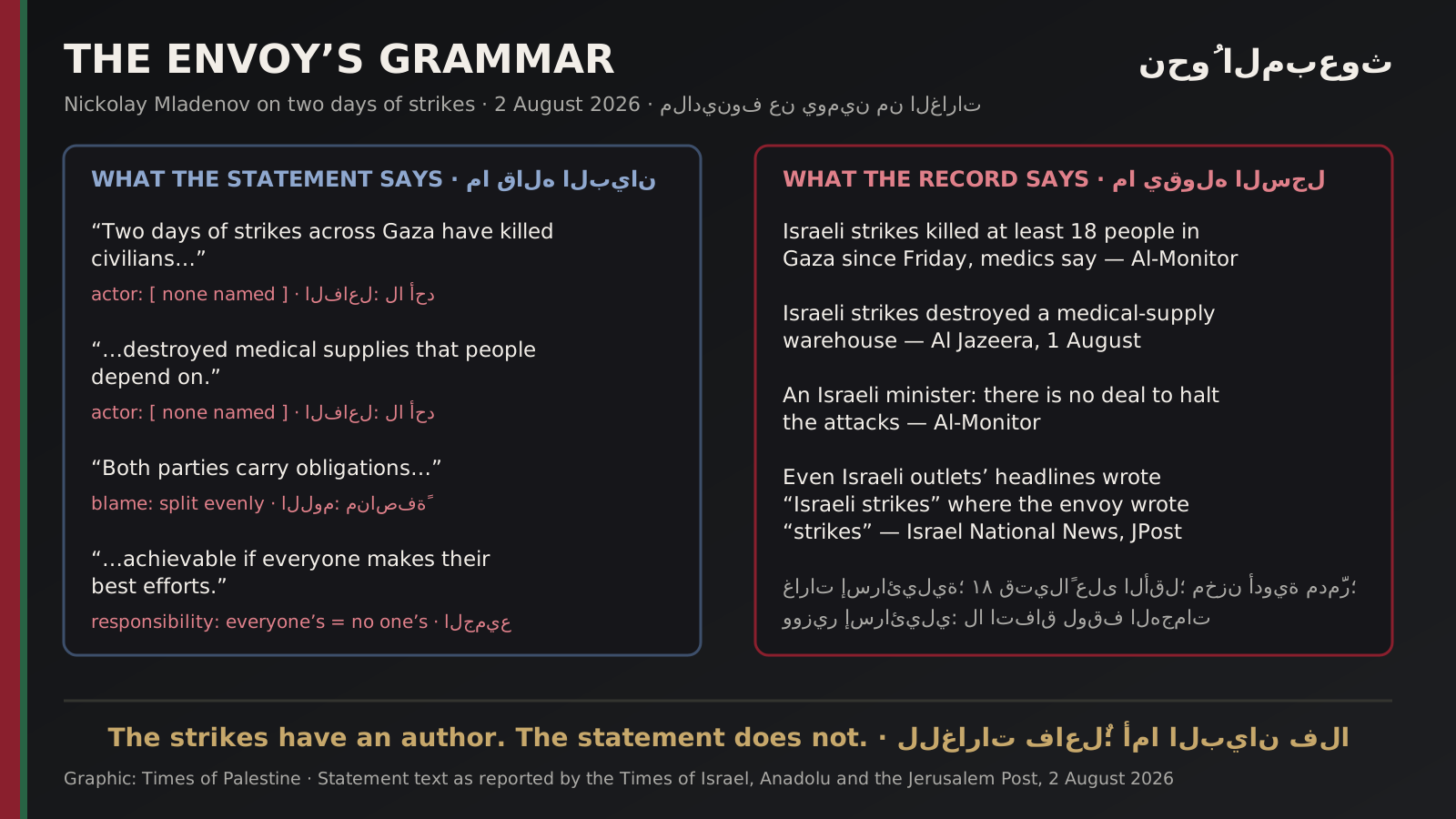
The Board of Peace's conduct is a running file in this paper: its envoy's statements have drawn scrutiny for mourning Gaza's dead without naming who kills them, and its machinery has run through foreign hands since the framework began. Criticism of that shape has come mostly from Palestinian factions and commentators.
A challenge from Al Habtoor is different in kind. He is a pillar of the Emirati business establishment — the UAE is a central financier of the framework's reconstruction promises — and his statement plants the demand for Palestinian-led, Arab-backed governance squarely inside the Gulf mainstream.
The statement is his own; no government has endorsed it. But the question he asks — why the owners of the land sit outside the room where it is governed — now stands in the open, in Arabic, from Dubai.