Her Story
Nablus union builds Palestine’s first childcare cooperative
Graphic: Times of Palestine
Original Reporting
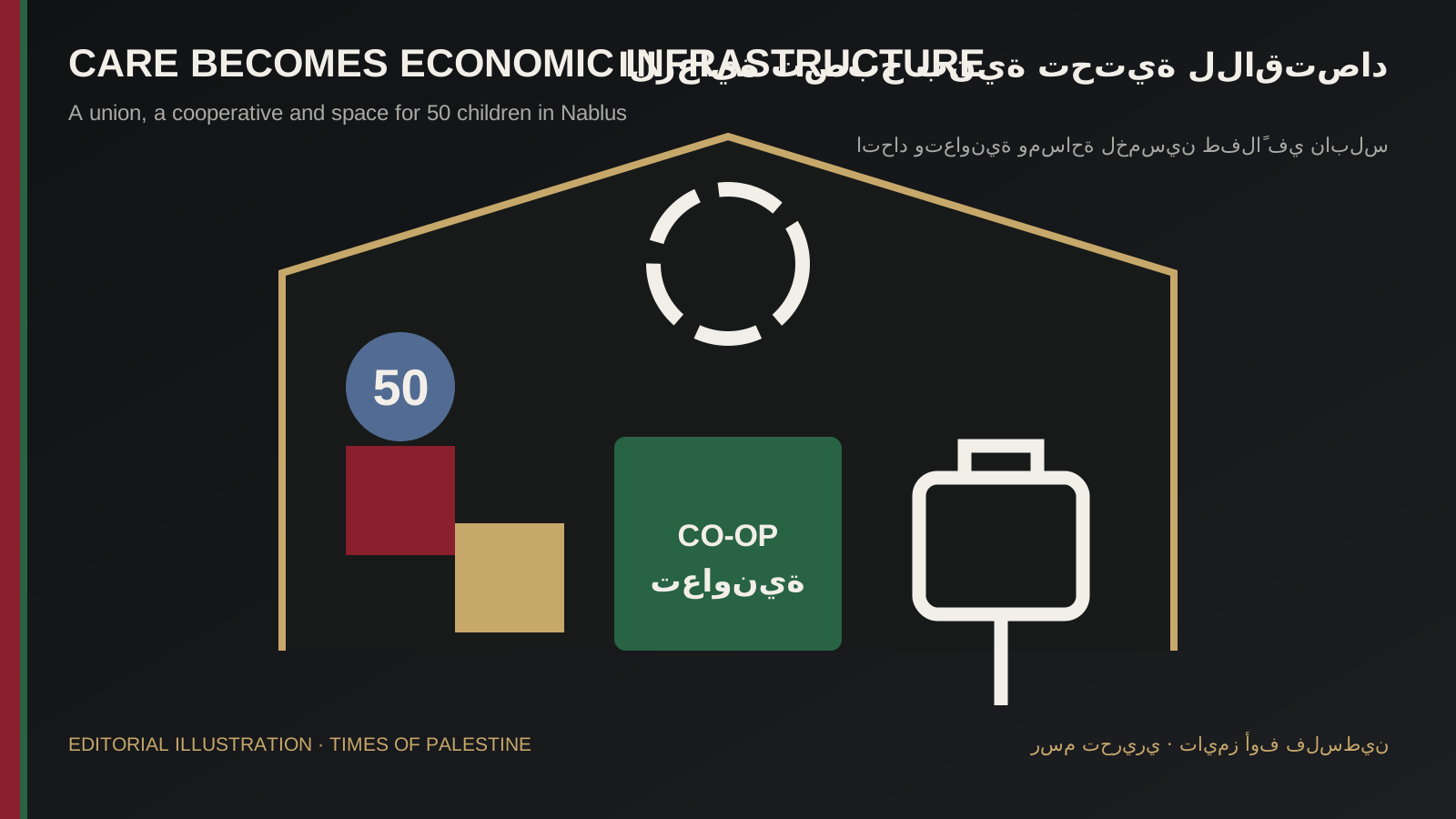
A trade-union building in Nablus is becoming the test site for Palestine’s first childcare cooperative, a nonprofit nursery designed to make paid work more accessible to parents while giving care workers formal jobs.
The United Nations country team’s 2025 results report records the cooperative as established and describes it as a community childcare model supporting working parents and decent employment. The International Labour Organization’s care-policy portal provides the operating design: premises supplied by the Palestinian General Federation of Trade Unions, rehabilitation and transition funding from the ILO, a director already appointed and capacity for 50 children.
Those records make the project more than a proposal, but they describe different stages. The UN report uses “established”; the ILO portal says the application was submitted and official registration had reached its final stage before licensing. Neither public source gives an opening date, fee schedule or current enrolment. Times of Palestine therefore describes an institution built and moving through final registration, not a nursery already proven at full capacity.
A cooperative answer to a care problem#
The model begins with a constraint familiar to working families: care is essential, but a commercial nursery can cost more than a job adds to household income. The Nablus project is structured as a social enterprise rather than a profit-distributing company. The ILO says fees are intended to remain affordable and care workers are to receive at least the Palestinian minimum wage.
That balance is the heart of the experiment. Fees must be low enough for parents to use the service, while income must be high enough to pay trained staff, maintain the premises and meet licensing standards. The union contributes space, reducing one of the largest fixed costs. An ILO grant covers rehabilitation and a transition period, giving the cooperative time to build membership and demand.
The project also changes who owns the service. A cooperative is governed for the benefit of its members rather than outside shareholders. The ILO record says the initiative has created a dedicated union unit for decent work in cooperative development, giving the pilot a path to influence other care services if the first nursery is sustainable.
Fifty places can test a larger policy#
A 50-child nursery cannot close Palestine’s care gap. It can answer practical questions that national policy often leaves abstract: how many families will enrol at an affordable fee, what public or donor subsidy is needed, how care workers can receive decent wages, and whether a union can operate a licensed service over time.
The project’s most useful public measure will not be the ribbon-cutting. It will be a year of transparent operating data: places offered and filled, fees, staff pay, subsidy per child, waiting lists, hours of service and the number of parents who entered or remained in work because care was available.
The ILO identifies the same sustainability tension. Keeping fees low without a continuing subsidy may restrict revenue; raising fees can exclude the families the cooperative was created to serve. That is not evidence of failure. It is the next design problem for the Cooperative Work Agency, the federation, local employers and public authorities to solve if they want the Nablus model to travel.
Care work is economic infrastructure#
The UN report places the cooperative inside a wider programme of women’s economic empowerment and inclusive job creation. That framing matters: a nursery is not only a social benefit. It is infrastructure that lets another worker take a shift, attend training or keep a job, while creating paid employment inside the care economy.
For Nablus, the next public milestones are straightforward: completion of registration and licensing, publication of the admission and fee rules, opening to children, and a first operating report. If those steps are documented, Palestine will have a model that can be costed and adapted by municipalities, unions and cooperatives elsewhere.
This article reconciled the UN country team’s report, published in June 2026, with the ILO programme record accessed on 3 August 2026. The apparent difference in status is reported rather than silently resolved. The article makes no allegation of misconduct and required no personal right of reply.