Her Story
UN Women counts NIS 297 million annual violence cost
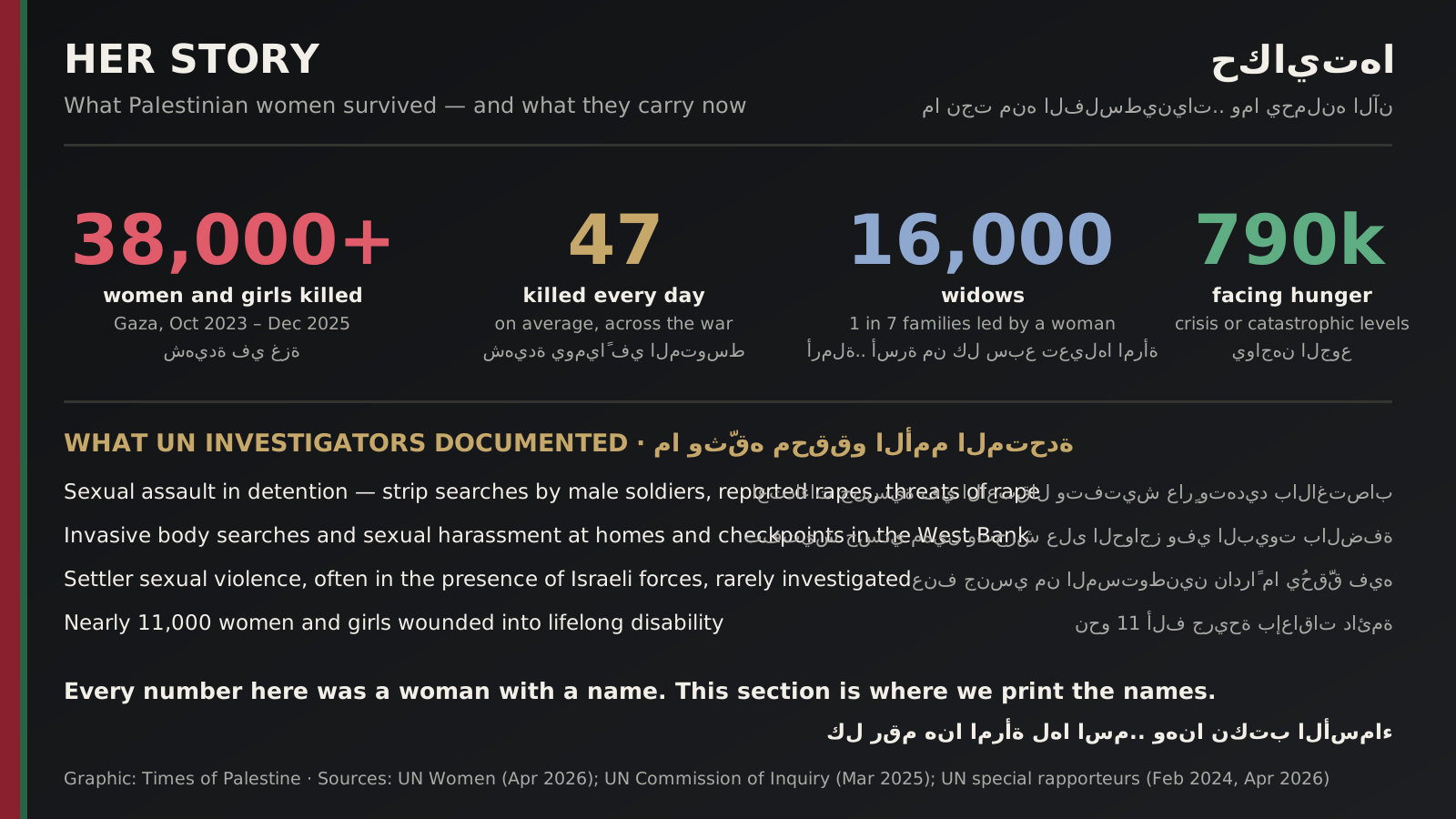
Graphic: Times of Palestine
Original Reporting
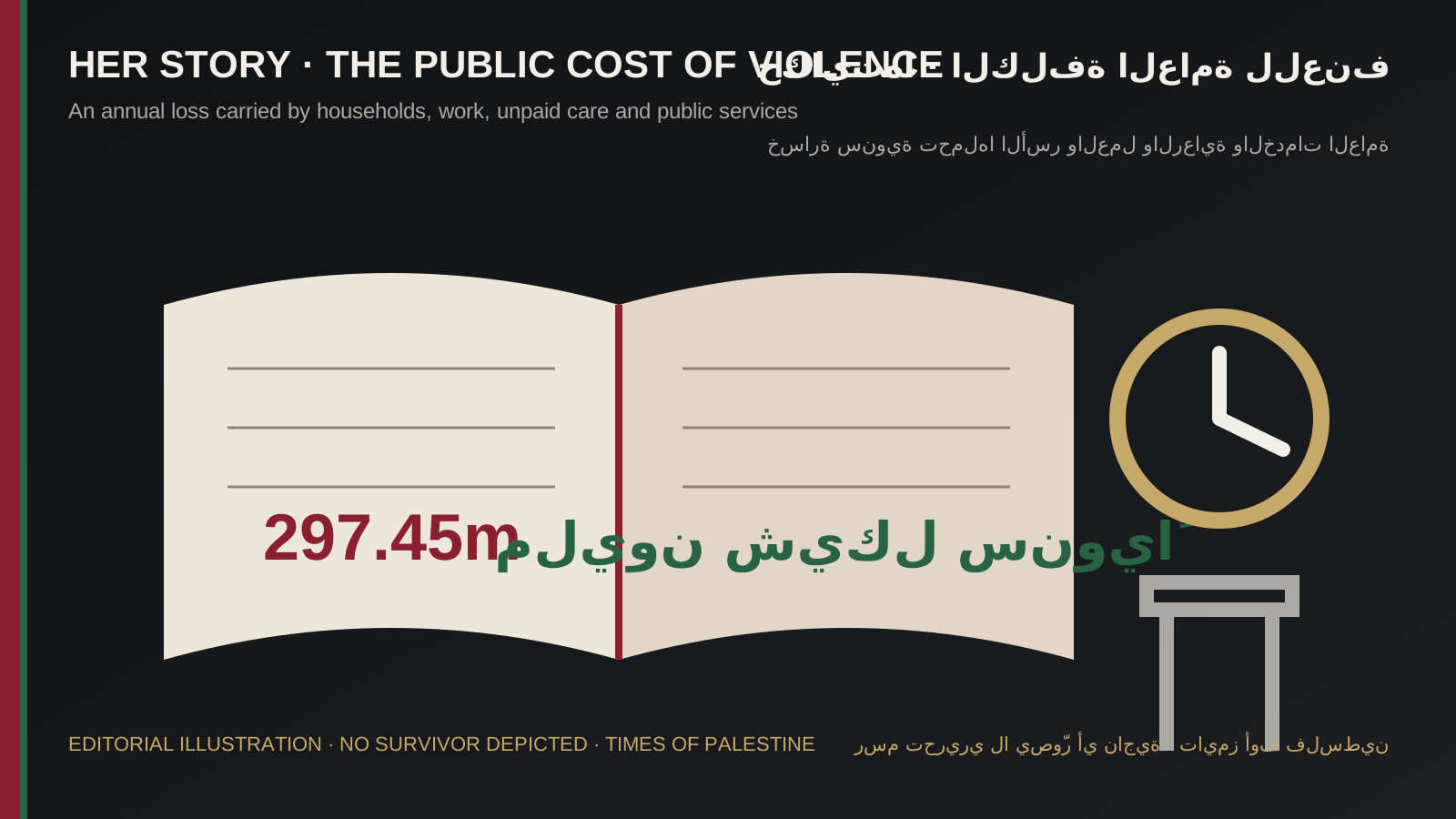
Violence against women costs Palestinian households, workplaces and public services an estimated NIS 297.45 million, or $86.47 million, every year, according to the first national economic costing released by UN Women in April.
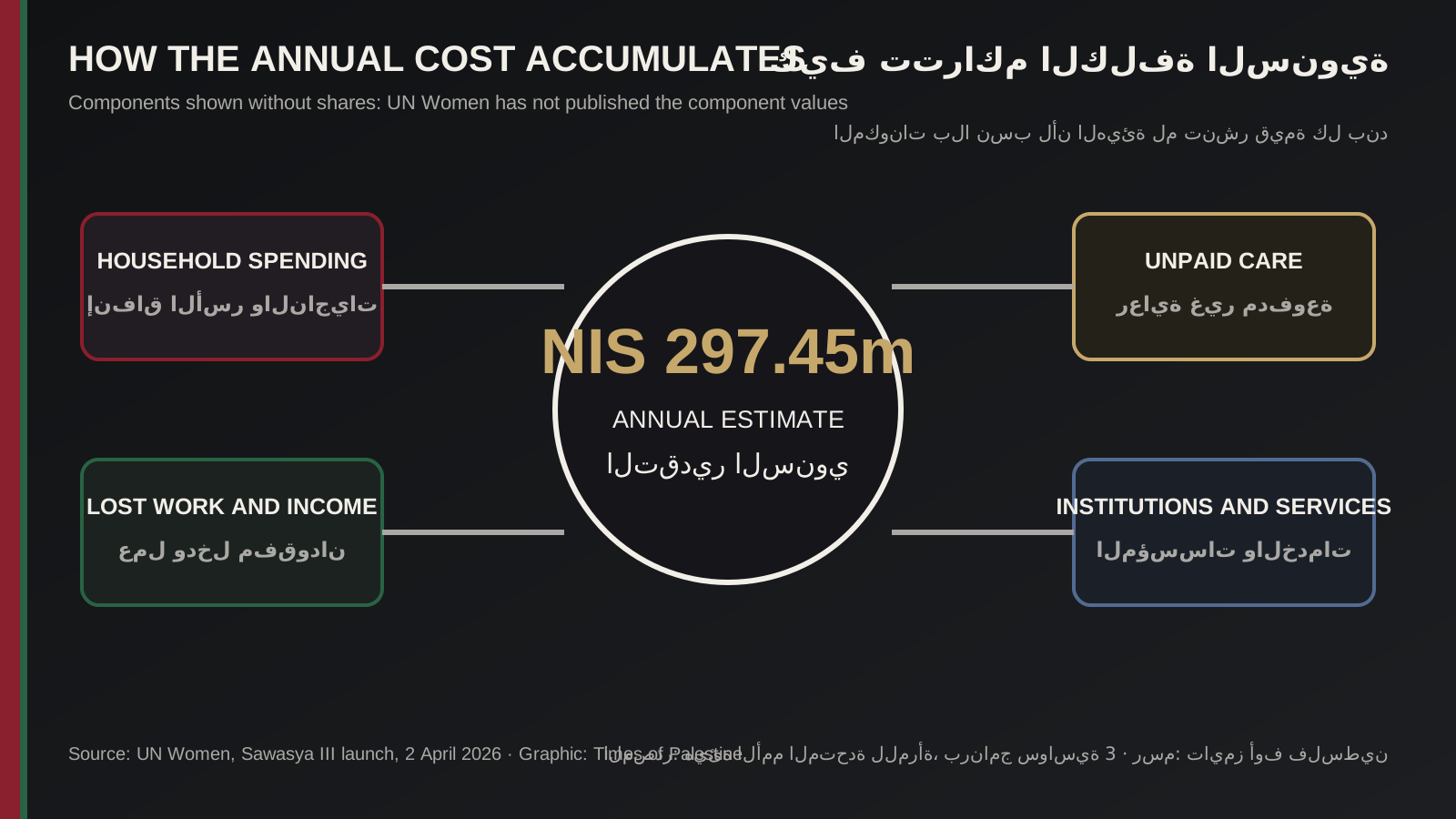
The estimate turns harm that is usually described through individual cases into a public balance sheet. UN Women said it includes money paid by survivors and their households, lost income and productivity, unpaid care, and the expenses incurred by institutions and service providers. It is not a count of compensation owed to survivors, a forecast of government spending or a valuation of a woman’s life. It is an estimate of economic activity and resources lost or redirected because violence occurred.
The cost reaches far beyond a police file#
A survivor may lose paid work while seeking medical treatment, legal help or a safe place to stay. A relative may leave work to provide care. A household may pay for transport, medicine and temporary accommodation. Health, justice and social-service institutions then carry staff and operating costs. If violence prevents someone from working or studying, the loss persists after the immediate incident.
That is why the headline number is larger than a tally of hospital bills. The study, produced under the Sawasya III joint programme implemented by UN Women, UNDP and UNICEF, counts costs borne by families alongside the cost of inaction. UN Women says the research is intended to guide prevention, survivor-centred services, legal reform and public budgeting, including debate over a Family Protection Bill.
The published release does not provide a breakdown of the NIS 297.45 million by cost category, base year, region or institution. Nor does it link a complete technical report from which the estimate can be independently reconstructed. Times of Palestine therefore treats the total as UN Women’s estimate, not an audited government figure, and does not divide it into components that the public record has not disclosed.
The prevalence baseline predates the war#
UN Women used the Palestinian Central Bureau of Statistics’ 2019 Violence Survey as a principal prevalence source. The PCBS metadata show that the survey covered several groups, including currently or formerly married women aged 15 to 64, never-married adults, children and older people. The women’s data file contains 5,105 cases.
That date matters. Interviews were conducted before the mass displacement, destruction and economic collapse that followed October 2023. The survey can support a pre-war baseline and a costing model; it cannot establish the current prevalence of violence in Gaza or the West Bank. Any use of its percentages as if they described 2026 would create false precision.
The distinction also protects against another common error: an annual economic estimate is not a census of incidents. Costing studies combine prevalence data, service use, labour and care assumptions, and unit prices. Their value lies in showing the scale and distribution of a burden; their limits depend on which harms were measured, which were disclosed and which never reached a service provider.
What the number can change#
The strongest use of the estimate is practical. Ministries can price prevention against the losses already borne by households and services. Hospitals and legal-aid providers can identify costs shifted onto survivors. Employers can see that violence is also a workplace issue when absence, job loss and reduced productivity fall on women and their colleagues.
The next useful publication would be the full technical workbook: definitions, prevalence assumptions, regional coverage, unit costs, sensitivity ranges and rules for avoiding double counting. Publishing those details would let Palestinian researchers test the model and update it as post-war data become available.
Until then, NIS 297.45 million should be read as a documented warning with a clear source and a visible boundary. It shows that violence against women consumes resources on a national scale. It does not yet show precisely who pays each share, how the burden differs between Gaza and the West Bank, or how much prevention would save.
This report compared UN Women’s 2 April 2026 release with the PCBS survey catalogue and data-file description, accessed on 3 August 2026. No allegation against an individual is made, so no personal right of reply was required. Times of Palestine will update the article if the complete costing study is published.