Politics & Diplomacy
Fatah's eighth congress elevates Barghouti, Faraj and the president's son

Image credit: Mahmoud Abbas — Wikimedia Commons / Palestinian Authority press office · License
Original Reporting
When Fatah's eighth general congress closed in Ramallah in May — the movement's first in a decade — it left behind a wholly redrawn leadership map. A prisoner topped the poll from his cell, the intelligence chief came second, the president's son entered the top body on his first run, and half the old guard went home without seats.
Ten weeks on, with the new bodies seated and their officers chosen, the shape of what the congress produced is now clear enough to read. This report maps who rose, who fell, and what the new ladder says about the succession question hanging over a president in his nineties.
The congress by the numbers#
Some 2,500 delegates met at the presidential headquarters from 14 to 16 May, voting simultaneously in Ramallah, Gaza, Lebanon and Cairo. Turnout reached 94.64 per cent, the conference presidency announced through the official WAFA agency; 59 candidates contested the Central Committee's 18 elected seats and 450 contested the Revolutionary Council's 80.
Mahmoud Abbas, 90, was re-elected movement chairman by unanimous vote before the balloting began. The unanimity at the very top framed everything below it: the congress did not choose a successor, but it chose the people who will be in the room when that choice comes.

Who rose#
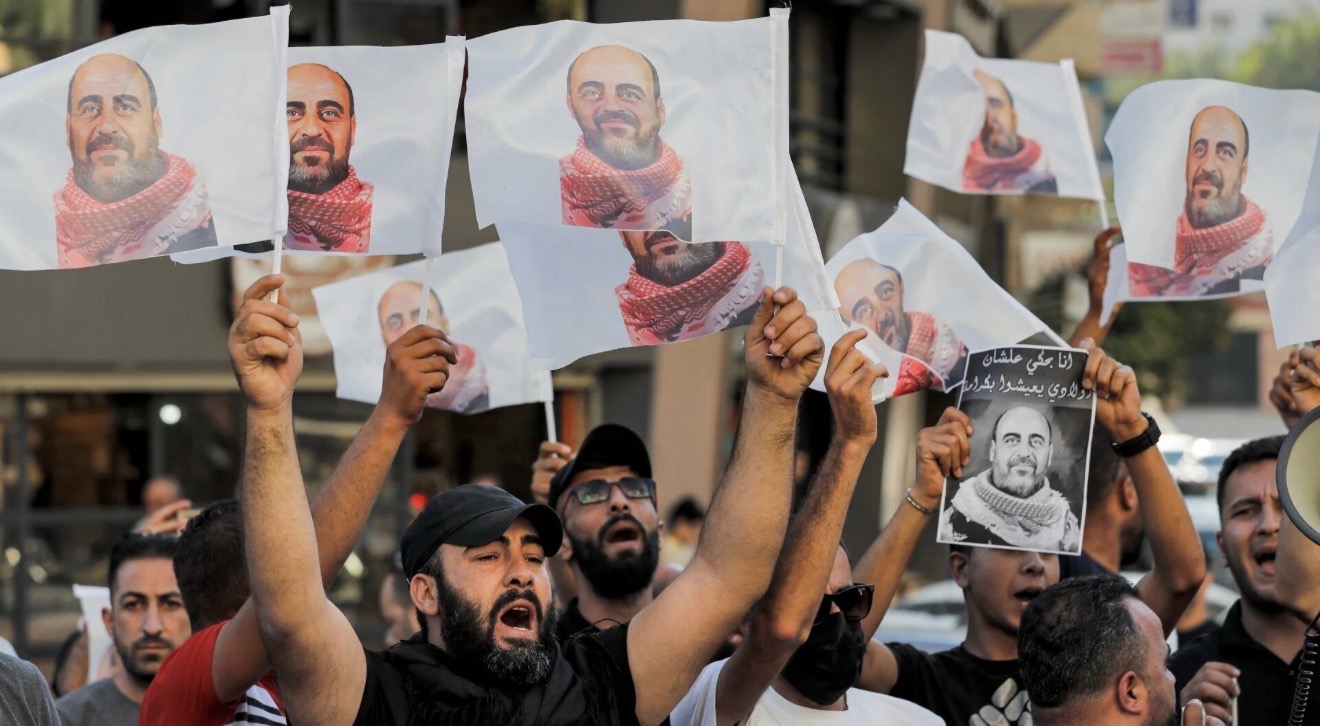
Marwan Barghouti took the most votes of any candidate, 1,893, from the Israeli prison where he has spent more than two decades. His wife Fadwa Barghouti was among the highest vote-getters for the Revolutionary Council. Members were told his seat stands regardless of Israel's refusal to release him — a result Palestinian commentators read as the base's answer to the question the leadership avoids.
Majed Faraj, head of the General Intelligence Service, came second with 1,884 — the security establishment's arrival at the movement's top table in its own name. Our profile of the men who run Palestinian security traced how every one of them holds office by presidential decree; Faraj now adds an elected mandate no other commander has.
Jibril Rajoub took the third-highest tally and kept the secretary-generalship — the platform from which he has been demanding a presidential election first.
Hussein al-Sheikh took 1,586, and the congress then made him the movement's first-ever deputy chairman, adding a third title to the PLO vice-presidency and succession slot he already holds — the institutional lane of the succession, formalised.
The Times of Israel read the new post as insurance: an heir apparent seated while the poll-topper stays behind bars.
Laila Ghannam, the Ramallah governor, led the women with 1,494. Zakaria Zubeidi, the Jenin fighter freed in the January 2025 prisoner exchange, entered with 1,231; Jerusalem governor Adnan Ghaith with 1,092. Gaza's Ahmad Helles, with 1,159, is the only Gazan of the previous committee to survive.
The president's son#
Yasser Abbas, a businessman who had never held movement office, entered the Central Committee with 1,301 votes — eighth place. Al Jazeera's post-election analysis grouped his win with the seats taken by children of former leaders as the congress's clearest continuity signal, and critics across Palestinian media called the family name on the ballot a dynastic turn in a movement that has not faced voters nationally since 2006.
The counter-argument made by his supporters is procedural: he ran, and 1,301 delegates chose him. Both readings can be true at once — and the fact that the argument is happening at all, inside a movement whose founder's portrait still hangs over its congresses, is itself the news.
Dalal Erikat's arrival#
The Revolutionary Council produced the congress's most striking single result. Dalal Erikat — professor of diplomacy and strategic planning at the Arab American University, a Sorbonne doctorate, daughter of the late chief negotiator Saeb Erekat — topped the entire 450-candidate field on her first run, and now takes up her new post as the council's highest-mandated member.
A beautiful shock — loyalty from the movement's members to my late father, and a message that Fatah wants renewed representation and a leadership that restores its people's trust.
Dalal Erikat, to Al-Quds Al-Arabi after the results, May 2026
Al-Quds Al-Arabi's tally found women and younger candidates leading the council's results overall — the congress's counterweight to the continuity above. The new council held its first session on 11 June, in the presidential-compound hall named for her father, and elected Jamal al-Shobaki as its secretary with Aisha al-Kurd and Anton Salman as deputies.
Who fell#
The departures measure the same earthquake from the other side. Azzam al-Ahmad, for years the movement's man on reconciliation files; Rawhi Fattouh, the National Council speaker once positioned as a caretaker successor; the veteran Abbas Zaki; Ismail Jabr; and Sabri Saidam, the committee's deputy secretary-general since 2016 — all lost their seats. Husam Zomlot, the London envoy whose recognition diplomacy this newspaper has covered closely, ran and fell short.
Half the outgoing committee was replaced, and Gaza's representation collapsed to a single member — in the middle of Gaza's catastrophe. The Palestine Chronicle's reporting from inside the congress called that marginalisation the gathering's defining failure.
Who was not in the room#
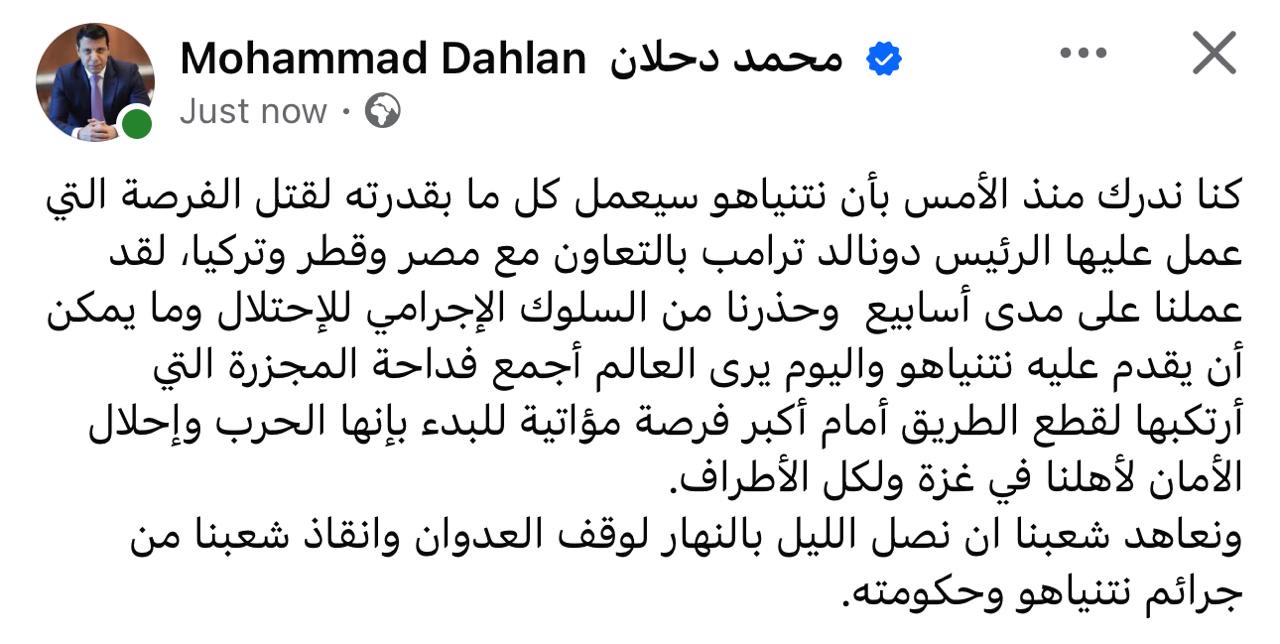
Nasser al-Kidwa, Yasser Arafat's nephew, expelled in 2021 for backing an electoral alternative, boycotted. The Reformist Democratic Current of Mohammed Dahlan — the exiled former Gaza security chief whose file this newspaper tracks — was not invited, despite what The Times of Israel reported as Egyptian pressure for an inclusive congress.
Fatah officials quoted by Middle East Online described pre-prepared voting lists and a gathering designed to concentrate power in Ramallah; the movement's leadership rejects that account and points to the turnout.
What the new ladder means#
Read together, the results sketch three succession lanes rather than one. The institutional lane runs through Hussein al-Sheikh, now deputy chairman atop his PLO titles — the arrangement our succession explainer mapped. The security lane runs through Majed Faraj's new elected standing. The popular lane runs through a cell in an Israeli prison, where the man who out-polled them all is serving five life sentences.
The congress resolved none of this — it armed all three lanes at once, while the base voted for renewal wherever the ballot allowed it: a prisoner first, a negotiator's daughter atop the council, women and the young through the middle ranks. Whether the movement's tenth decade is decided by delegates or by decree, May's ladder is the cast list.



,%20Commander%20of%20United%20States%20Central%20Command%20on%20August%208,%202025%20(cropped).jpg?width=640)