Health & Healing
Israel holds rehabilitation supplies as 43,000 wounded Gazans wait

Graphic: Times of Palestine
Original Reporting
An estimated 43,011 people in Gaza — 2 percent of the population — now live with injuries classed as potentially life-changing, according to the World Health Organization's May 2026 update to its trauma rehabilitation analysis, which put the number of conflict-related injuries requiring long-term rehabilitation at more than 50,000.
WHO's 12 May statement said the estimate covers 172,000 people injured since October 2023, that up to a quarter of those with life-changing injuries are children, roughly 10,000, and that almost 5,000 additional injuries had been recorded since its previous report in September 2025. Nearly half of those, WHO said, occurred after the ceasefire was announced in October 2025.
The breakdown is dominated by limbs: more than 22,000 major limb injuries, more than 5,000 traumatic amputations, more than 2,000 spinal cord injuries, more than 3,400 major burns and more than 1,300 major traumatic brain injuries, according to the same WHO figures.
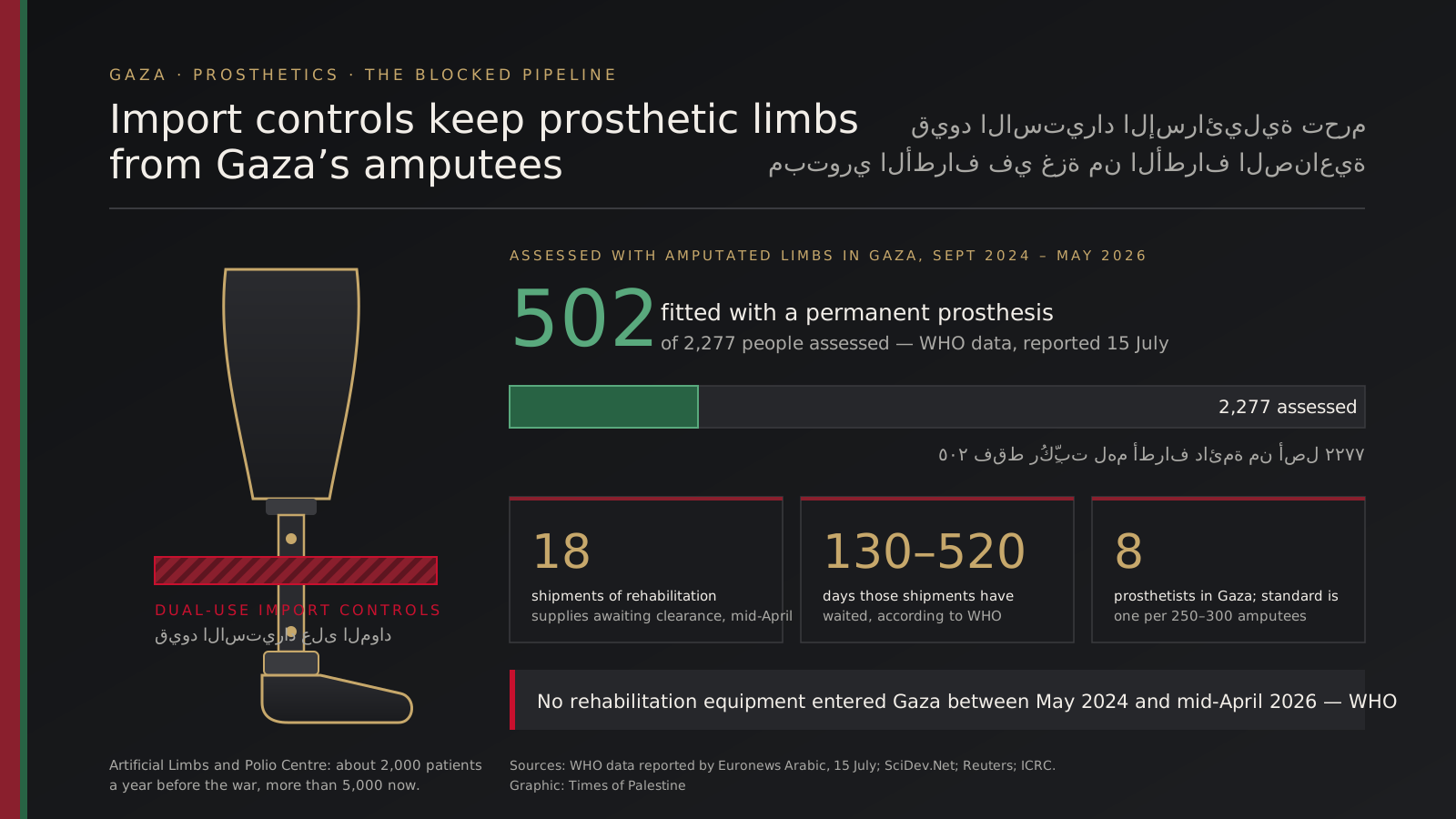
Against that, the treating capacity is a rounding error. WHO reported in October 2025 that Gaza had around 1,300 physiotherapists and 400 occupational therapists before the war, that many were displaced and at least 42 had been killed as of September 2024, and that despite the scale of amputations the Strip had only eight prosthetists to make and fit artificial limbs.
Of about 2,300 people with amputated limbs assessed in Gaza between September 2024 and May 2026, fewer than a quarter had been fitted with permanent prosthetics because of shortages, according to WHO figures reported in June by SciDev.Net, which also noted that all rehabilitation facilities in Gaza are running under severe constraints in staff, equipment or supplies.
The bottleneck is partly a border. No rehabilitation equipment for health facilities entered Gaza between May 2024 and mid-April 2026, WHO said in May, and as of mid-April 18 shipments of rehabilitation supplies were pending clearance after waits of between 130 and 520 days.
The pending consignments include adult and children's wheelchairs, prosthetic limbs and basic items such as stationary bicycles. WHO put the outstanding requirement at nearly 33,000 assistive products in December 2025, and recorded just over 12,000 mobility products distributed between January 2025 and May 2026.
WHO's account does not give a reason offered by Israeli authorities for the delays, and no such explanation appears in its May release.
Israel's restrictions on the entry of wheelchairs, prosthetic and orthotic materials, hearing devices, batteries and spare parts were raised by the State of Palestine before the UN Committee on the Rights of Persons with Disabilities in August 2025, according to the summary published by the UN human rights office, which also recorded UNRWA's statement that its 27 physiotherapists delivered more than 64,000 sessions in 2024 — many remotely — and more than 53,000 in the first half of 2025.
The one dedicated prosthetics hospital in the Strip has been in and out of service throughout.
Its director, Ahmed Naim, told Al Jazeera Net in August 2025 that Sheikh Hamad hospital could manufacture about 150 artificial limbs a year before the war and that, at that rate, clearing the current caseload would take more than 20 years.
The hospital was out of service entirely from October 2023 until February 2025, resumed work in March 2025, and was left by its staff when tanks surrounded it during the ground assault on Gaza City, he said.
It restarted at its northern site at the end of December 2025 after the September 2025 offensive forced it to close, Al Jazeera reported, quoting Qatar Fund for Development director-general Fahad bin Hamad Al-Sulaiti, who chairs the hospital board; the reopening included the only CT scanner in Gaza's northern governorates. Al-Sharq reported on 4 June that the hospital's splint unit was still operating.
The registry work has advanced faster than the treatment. The ICRC, in its figures for 7 October 2023 to 31 October 2025, said it had begun documenting amputations, spinal cord injuries and brain injuries causing paralysis with Gaza's health ministry, that 5,000 people had registered including 2,830 amputees, that 1,863 had been clinically assessed, and that 800 amputation cases received pre-prosthetic rehabilitation.
The counts do not agree. B'Tselem, citing health ministry data supplied to Physicians for Human Rights Israel, reported in July 2025 more than 4,700 amputations including over 940 children; Naim cited more than 6,500 new amputations from ministry, WHO and Red Cross records; WHO's own figure is above 5,000.
Two of Gaza's rehabilitation hospitals remain largely out of use. The WHO-coordinated Rehabilitation Task Force, in a technical note on spinal cord injury care, recorded that Al-Wafa', the Strip's oldest rehabilitation centre with 70 beds, was damaged and inaccessible, and that Al-Amal in Khan Younis, formerly 55 beds, had reopened a small number with one physiotherapist present.
That note set out the alternative: grouping medically stable spinal-cord patients with their caregivers in a few non-acute step-down units stocked with pressure-reducing mattresses and bowel, bladder and wound-care consumables — a model that depends on the same equipment now waiting at the crossings.
For patients who cannot be treated inside Gaza, exit is narrow.
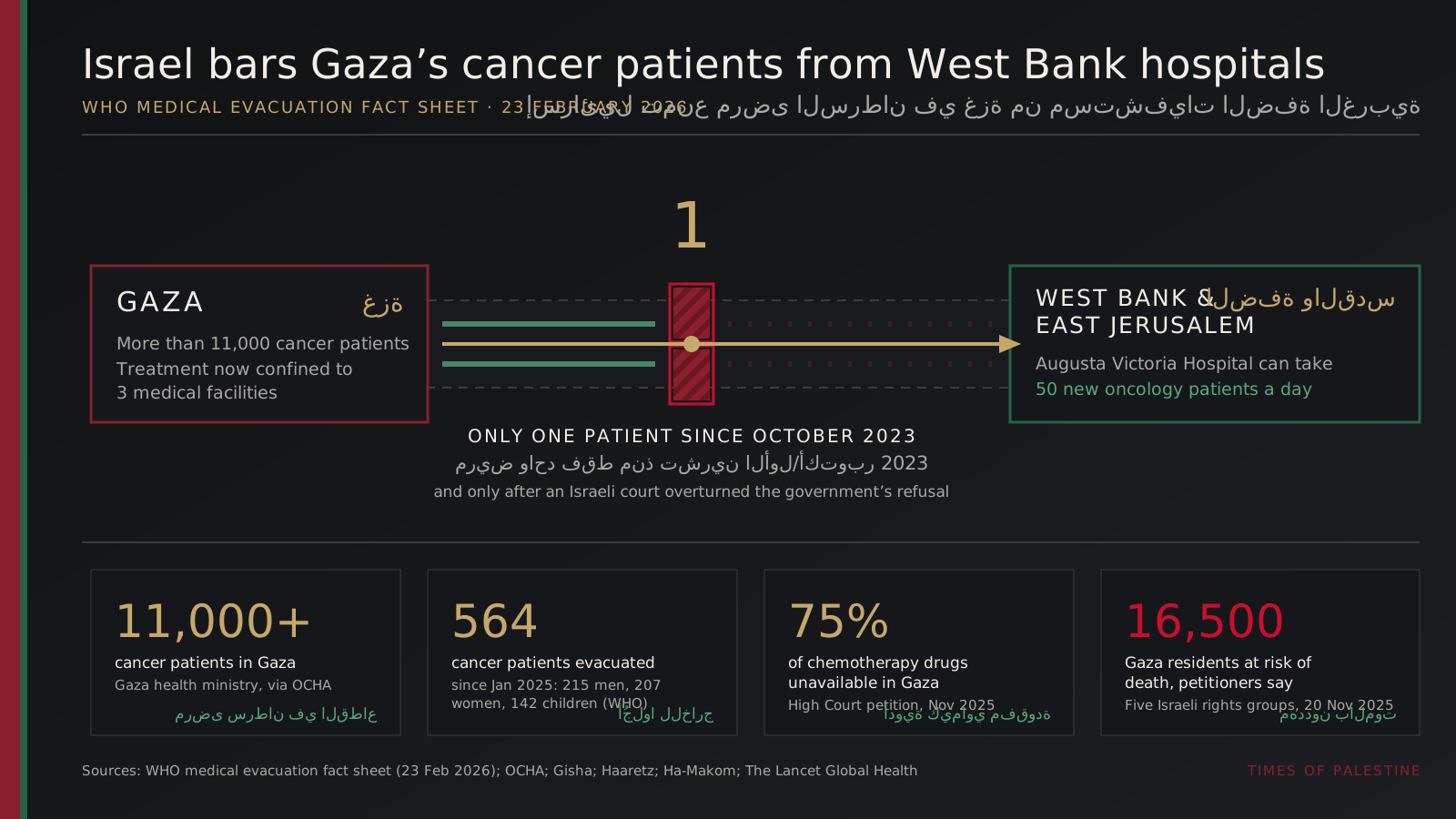
Gisha's February report cited WHO data showing 3,140 patients left under the medical evacuation mechanism between July 2024 and 5 January 2026, while more than 18,500 still needed evacuation as of 5 February, and identified Israel's general refusal to let patients return to Gaza as a central obstacle to finding host facilities.
Gaza's health ministry told Al Jazeera in June that six to 10 patients die each day awaiting transfer.
Whether the 18 stalled shipments clear, and how many of the assessed amputees are fitted this year, will be settled at the crossings rather than in the clinics.